Solutions • Leak detection • Partial discharge

Acoustic imaging camera to find compressed air leaks, gas leaks and partial discharge.

An acoustic imaging camera shows you the leaking fitting on screen, with the plant running and from several meters away. We help you choose the right model for your site, from compressed air networks to electrical substations, and prepare your quote.

Reply within 24 hours · Purchase or rental · Technical support in Italy

In short

What is an acoustic imaging camera?

It is an instrument that listens through dozens of microphones at once and shows on screen, on top of the video image, where a sound is coming from. A compressed air or gas leak makes a hiss that is mostly ultrasonic, so you often cannot hear it. The camera turns it into a colored spot right on the leaking fitting.

We help you choose the right acoustic camera: reply within 24 hours

How much does an acoustic imaging camera cost?

Prices vary widely between a compressed air model and one built for high-voltage partial discharge. Let us know what you need to check and we will send you a quote for the configuration you need, without features you will not use.

  • Reply within 24 hours
  • Purchase or rental
  • Technical support in Italy
Acoustic imaging

How an acoustic imaging camera works.

The front of the instrument carries an array of microphones, usually from a few dozen to more than a hundred. Each microphone picks up the same sound with a tiny difference in timing, and the software uses those differences to work out where the sound comes from. The result is a sound map laid over the video image and updated in real time.

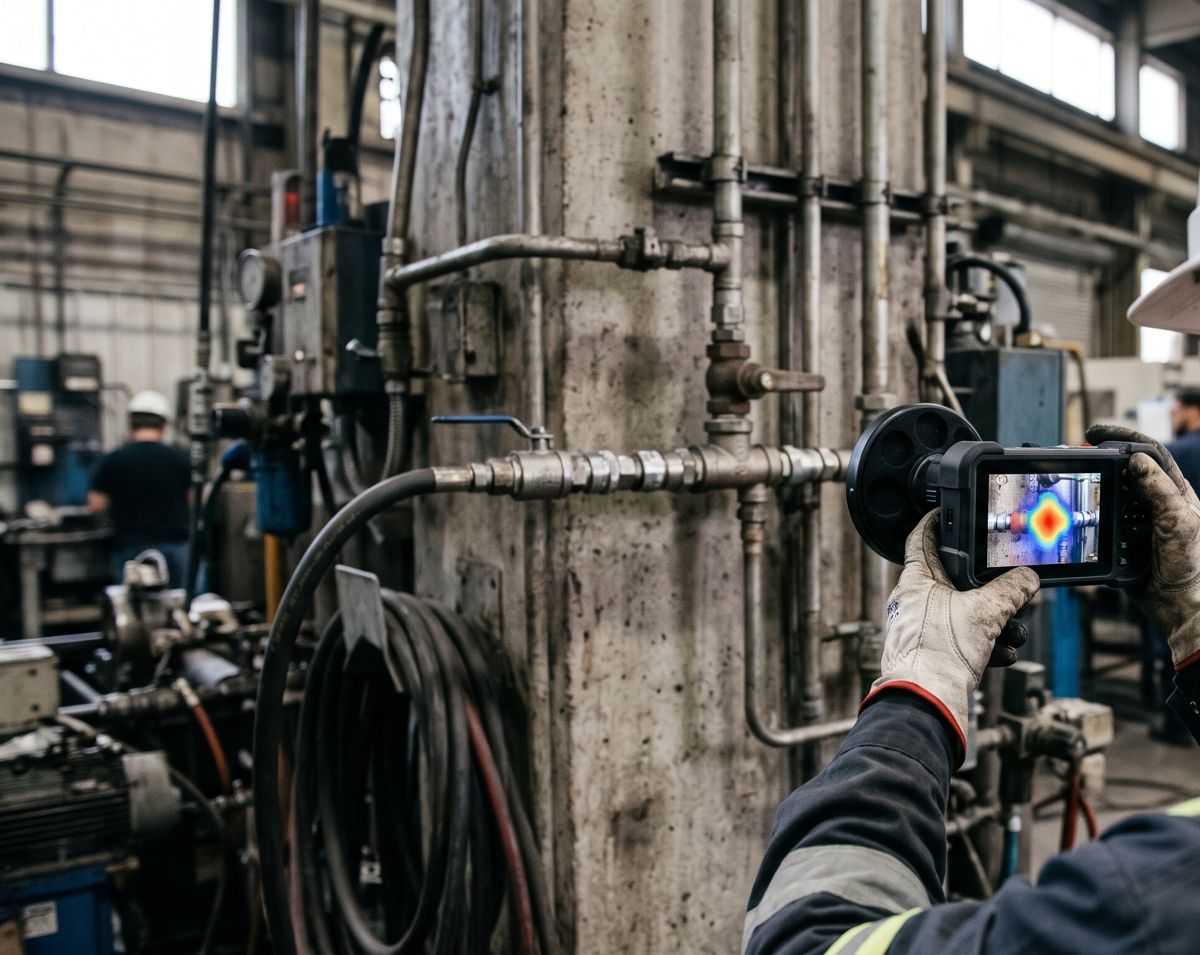
Technician using an acoustic imaging camera to locate a compressed air leak on a fitting in a plant
Leak detection

The hiss of a leak becomes a spot on the image

Air or gas escaping through a hole creates turbulence and a noise concentrated mostly in the ultrasonic range, roughly between 20 and 100 kHz. By picking the right frequency band, the instrument separates that hiss from machine noise, which sits lower, and shows it even in a plant at full production.

  • You can check a whole wall of piping in seconds, without walking up to every fitting.
  • Each leak is documented with a photo, its location and, on models that calculate it, an estimated flow rate.
  • It works with any pressurized gas, because it listens to the leak and not to the gas composition.
Choosing the instrument

Acoustic camera, ultrasonic detector or thermal camera?

These instruments are often confused, but they find different things. The table helps you see which one your inspection needs, and adds the infrared gas imaging camera used for hydrocarbon gases.

Comparison of ultrasonic leak detector, acoustic imaging camera, thermal camera and infrared gas imaging camera
InstrumentWhat it detectsHow you workStrengthsLimits
Ultrasonic leak detectorThe ultrasonic hiss of leaks and dischargesOne sensor, headphones, one point at a timeLow cost, easy to useSlow on large plants, no image for the report
Acoustic imaging cameraAir, gas, vacuum and steam leaks; partial discharge; mechanical noisePoint it at the plant and see the source on screenFast, works at a distance with machines running, documents every leakNeeds a pressurized leak that makes noise; costs more than a detector
Thermal cameraTemperature differencesPoint it and read the thermal mapExcellent on electrical panels, motors, insulation and steamA small compressed air leak is usually invisible
Infrared gas imaging cameraThe plume of certain gases, such as methane and other hydrocarbonsPoint it and see the gas like smokeSees silent leaks too and shows where the plume goesOnly the gases it is tuned for; usually far more expensive

If compressed air is your main problem, an acoustic camera is almost always the most cost-effective choice: it finds leaks faster than an ultrasonic detector and, unlike a thermal camera, makes them visible. For a plant with natural gas or hydrocarbons the question changes, because slow or low-pressure leaks matter too. There, many sites use both, the acoustic camera for routine leak hunting and the infrared camera for emission surveys.

Applications

Where acoustic cameras are used.

Compressed air

The most common use: distribution networks, quick couplings, hoses, valves and pneumatic cylinders. The return on a leak survey is measured in the electricity your compressors stop wasting.

Industrial gases and vacuum

Nitrogen, argon, oxygen, CO₂ and helium in process and welding lines, plus air ingress in vacuum lines. Here a leak costs twice, in purchased gas and in process quality.

Steam and steam traps

Leaks from flanges and valves, and traps stuck open. On steam systems the acoustic camera works alongside the thermal camera.

Partial discharge and corona

On insulators, cable terminations, medium-voltage switchgear and substations, partial discharge produces ultrasound. Seeing it on the image helps you plan repairs before the insulation fails.

Predictive maintenance

Bearings, gearboxes and mechanical parts change their sound before they fail. Vibration analysis remains the in-depth tool, but an acoustic walk-around helps you see where to look.

Tightness testing

Checking the seal of tanks, enclosures, doors and machine gaskets, also with an ultrasonic transmitter placed inside.

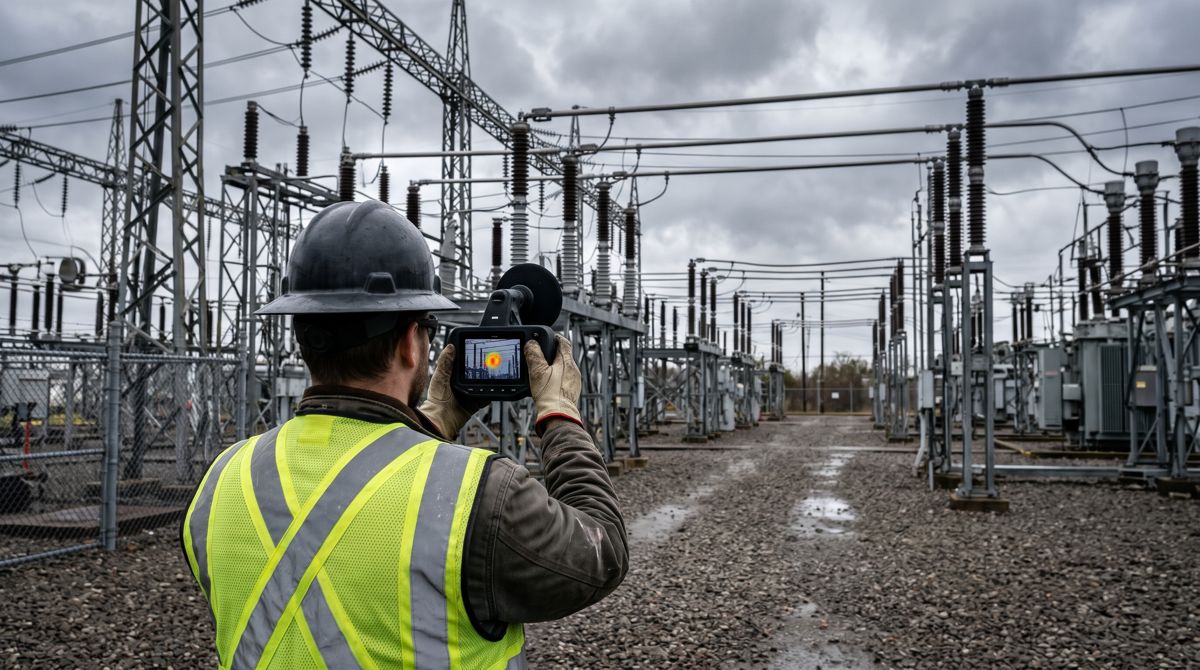
Technician using an acoustic imaging camera to locate partial discharge on an insulator in an electrical substation
Partial discharge

Substations and switchgear, from a safe distance

For partial discharge the acoustic camera works from outside and without contact, so no outage is needed. Models designed for this job classify the discharge type (for example corona, surface or floating potential) and help you decide which components to prioritize. Electrical measurement to IEC 60270 remains the reference for lab and acceptance tests, while acoustic methods are covered by IEC TS 62478.

  • Insulators, cable terminations and bushings.
  • Medium-voltage switchgear compartments, even with doors closed if there are vents or gaps the sound can escape through.
  • Overhead lines and outdoor substations.

Which acoustic camera does your plant need?

Describe what you want to check and how large the site is, and we will suggest the right model and send you a quote, for rental too.

  • Compressed air, gas and partial discharge
  • Technical support in Italy
Technical criteria

How to choose an acoustic imaging camera.

Datasheets all look alike, but a few parameters decide whether the instrument will work in your plant. These are the ones we go through with you before suggesting a model.

Frequency range

The higher the range reaches into ultrasound, the easier it is to separate small leaks from machine noise. For partial discharge the lower part of the range matters too, because lower frequencies lose less energy in air and carry better over distance.

Number of microphones and sensitivity

In general, more microphones give a cleaner map and make smaller leaks visible from farther away. On large or noisy plants the difference shows immediately.

Working distance

A compressed air network is checked from a few meters, while a substation or an overhead header may require tens of meters. Ask for the manufacturer's data at the distance you will actually work.

Flow and cost estimation

Some models calculate the flow rate and annual energy cost of each leak. It helps you set repair priorities and justify the work, as long as you treat it as an estimate.

Partial discharge analysis

For electrical assets you need discharge type classification and software that makes it readable in the report. On a model built for compressed air this feature is often missing or limited.

Software, reports and certification

What counts is how long it takes to go from photos to a report listing every leak. Hazardous areas require an ATEX or IECEx certified model, which has to be chosen up front, not adapted later.

To look inside machines and piping, use an industrial borescope or endoscope instead. Other inspections on structures and components are covered on the non-destructive testing page, and the other instrument categories are listed in DIPITECH solutions.

Buy, rent or outsource

Buy, rent or hire a leak detection service?

If you run a large compressed air network, several sites or electrical assets to inspect every year, buying usually makes sense, because leaks come back within a few months and leak detection only pays off when it becomes a regular round done by people who know the plant.

For a first survey, or as part of an energy audit, renting lets you measure how much the plant is losing before you decide. ISO 11011 describes how to assess the energy efficiency of a compressed air system, and leak detection is part of it. An outside service is still useful when you need a report signed by an independent technician.

The DIPITECH approach

What you look for and where you work.

On a compressed air network you walk within a few meters of the leaks, while in a 150 kV substation you keep a safe distance and need an instrument that picks up discharges from far away.

What to send us for an assessment

  • What you want to check: compressed air, gas, vacuum, steam, partial discharge.
  • Size of the plant and number of sites.
  • Typical distance between you and the points to check.
  • Line pressure and compressor operating hours.
  • Whether you work in ATEX zones or on high-voltage equipment.
  • Whether you prefer to buy or rent.
FAQ

Acoustic imaging camera FAQ

What is an acoustic camera used for in an industrial plant?

Mainly to find compressed air, industrial gas, steam and vacuum leaks, even in noisy areas, and to locate partial discharge on insulators, switchgear and power lines. Some models also help spot abnormal noise from bearings and other mechanical parts.

How much does an acoustic imaging camera cost?

It depends mostly on the number of microphones, the frequency range, the working distance and the software. Leak flow estimation, partial discharge analysis and versions for explosive atmospheres also add to the price. A model for compressed air only costs much less than one built for electrical substations. Tell us what you need to check and we will send a quote for the right configuration; for a short measurement campaign, ask us about rental too.

What is the difference between an acoustic camera and an ultrasonic leak detector?

An ultrasonic leak detector has a single sensor and you use it with headphones, checking one fitting at a time. An acoustic camera looks at a whole wall of piping and shows the leak on the image right away, from several meters and with machines running. It costs more, but on a large plant it saves many hours and gives you a photo of every leak to repair.

Can a thermal camera find compressed air leaks?

Usually not. Air escaping from a small leak does not change the surface temperature enough for a thermal camera to see it. Thermal cameras are great for electrical and mechanical overheating, while leaks call for an acoustic camera or, for some gases, an infrared camera built for gas imaging.

How much can you save by fixing compressed air leaks?

The U.S. Department of Energy estimates that leaks in poorly maintained systems can waste 20-30% of a compressor's output in industrial plants. Real savings depend on line pressure, operating hours and energy cost. With a flow estimate for each leak you can calculate them and decide which repairs come first.

Can an acoustic camera be used in hazardous (ATEX) areas?

Only a model certified for that zone. Versions for potentially explosive atmospheres exist, but there are few of them and they cost more. If you work in gas plants, refineries or areas with solvents, mention it in your request and we will check the model's ATEX or IECEx certification with the manufacturer.

How do I request a quote?

Message us on WhatsApp, by email or through the form, saying what you want to check (compressed air, gas, vacuum, partial discharge), how large the plant is, your working distance and whether you need an ATEX model. We reply within 24 hours with the right configuration and a quote.

Application support

Support with your choice, before and after you buy.

We help you choose an acoustic camera for the inspection you need to do, and you get technical support in Italy on rental as well as after purchase.

Contact

Let’s find the right acoustic camera for your plant.

Compressed air leaks on the shop floor or partial discharge in a substation? Describe where you work and we point you to the instrument, with a quote.

Application request

Tell us what you need to check.

Describe what you are looking for and where; add photos or plant data if you have them.

WhatsApp