Solutions • Video inspection • Pipes and sewers

Pipe inspection camera for drains and sewers, push rod or crawler.

A pipe inspection camera lets you see inside drains, sewers, process lines and flues without digging, and record the footage for your report. Pipe sizes, run lengths and the kind of work you do tell us whether a push rod system is enough or you need a motorized crawler, and we build the quote on that.

Reply within 24 hours · Purchase or rental · Technical support in Italy

In short

What is a pipe inspection camera?

It is a sealed camera mounted on the end of a semi-rigid rod or on a small motorized carriage, which goes into the pipe and sends the image to a monitor on the surface. It shows blockages, roots, breaks, offset joints and deposits without digging, measures how far away they are and leaves you footage for the inspection report.

We help you choose the right pipe inspection camera: reply within 24 hours

How much does a pipe inspection camera cost?

The price gap between a 30 m push rod camera for drains and a sewer crawler with defect coding software is large. Tell us which pipe sizes and lengths you inspect and we will put together a quote with the reel, camera and software you will use.

  • Reply within 24 hours
  • Purchase or rental
  • Technical support in Italy
Video inspection

How a pipe inspection camera works.

A complete system has three parts, namely the camera head with its LEDs, the cable that carries it into the pipe and the control unit with monitor and recording. The cable counter tells you how far from the entry point each defect is, and the sonde in the head lets you find that spot from above with a locator.

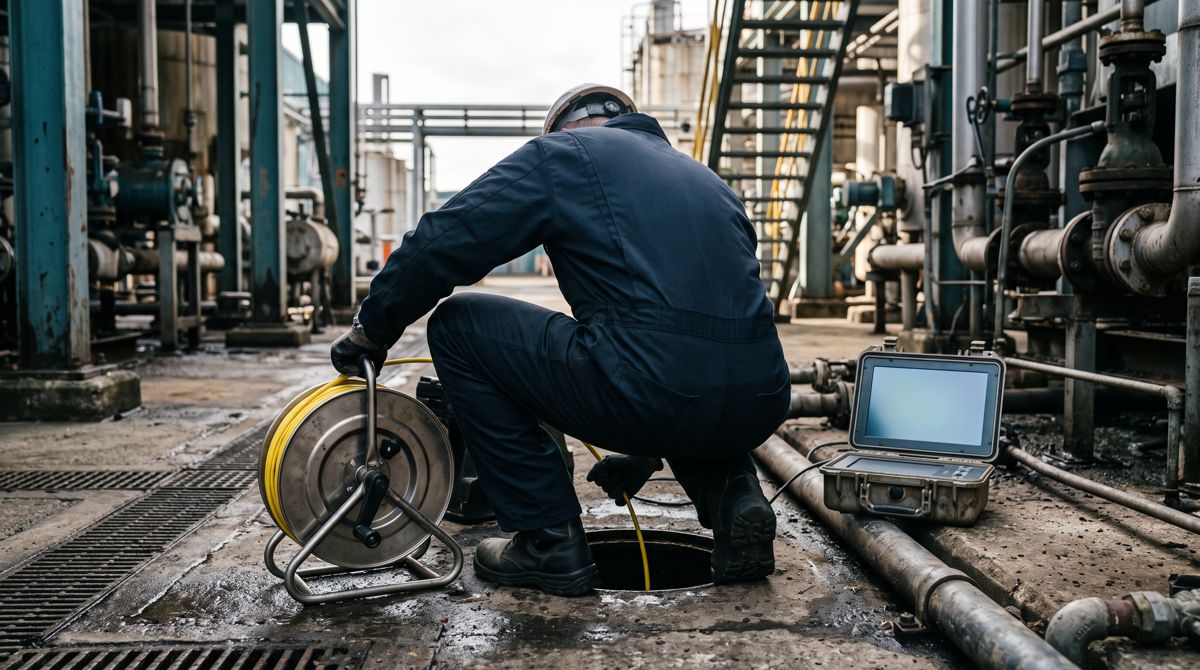
Technician feeding a push rod pipe inspection camera cable from a reel into a drain opening, with the control unit on the ground
Push rod systems

Push rod camera on a reel, for drains and small-diameter lines

The semi-rigid fiberglass rod unwinds from a reel and you push it into the pipe by hand. The smallest heads fit 40-50 mm pipes and get around 90 degree bends, while larger heads work well up to 150-200 mm. Usable length typically runs from 20-30 meters to 60-100 meters, beyond which pushing the rod gets hard.

  • A self-leveling head keeps the image upright even when it rotates in the pipe, so you can tell where a defect sits on the cross section.
  • The sonde in the head, often at 512 Hz, lets you find the dig spot from above with a receiver that also estimates depth.
  • Video and photos are recorded with the distance overlaid, so the footage goes straight into the report for your client.
Choosing the system

Push rod camera, crawler or industrial borescope?

Anyone shopping for a pipe inspection camera runs into very different systems. The table compares the three families of pipe video inspection with the industrial borescope, which is often confused with them.

Comparison of push rod camera, motorized crawler, manhole zoom camera on a pole and industrial borescope
SystemTypical diametersTypical lengthsStrengthsLimits
Push rod camera on a reelFrom 40-50 mm up to about 150-200 mmFrom 20-30 m up to 60-100 mPortable, ready in minutes, gets around tight bendsHard to push on long runs and in large pipes
Motorized crawlerFrom 100-150 mm up to large trunk sewersHundreds of meters with the cable winchPan and tilt head with zoom, measurements, coded reportsHeavier and more expensive, usually van-mounted, cannot take tight bends
Manhole zoom camera on a poleAny size, it looks into the pipe from the manholeThe first few meters, farther with zoomQuick check of many manholes without enteringCannot see defects far away or past a bend
Industrial borescope or videoscopeProbes a few millimeters acrossUsually a few metersThin probe, often articulating, for machines and componentsNot suited to sludge and sewers, short cables

For a drain cleaning company or a plumber working on residential and industrial drains, the push rod camera is the everyday tool. The crawler comes in when you inspect long sewer runs, work for a municipality or a utility that wants a coded report, or check a line before and after rehabilitation. Many contractors start with a push rod system and add a crawler once they win network inspection contracts.

If instead you need to look inside a machine, a heat exchanger or a component with access ports a few millimeters wide, you need an industrial borescope rather than a pipe camera.

Applications

Where pipe inspection cameras are used.

Drain cleaning and maintenance

Before jetting you find where the blockage is, afterward you confirm the pipe is clear and show the footage to the client. It is the daily work of anyone maintaining residential and industrial drains.

Sewer networks and trunk mains

Surveys for municipalities, water districts and utilities, with a report that codes every defect according to EN 13508-2. They are used to plan repairs and rate the condition of the network.

Acceptance of new pipelines

Checking joints, laterals, deformation and cleanliness before the work is handed over. The footage becomes part of the acceptance documents.

Before and after rehabilitation

Cured-in-place lining and other trenchless methods start with a video survey to measure the pipe and end with another one to check the result and reopen the laterals.

Chimney flues

Cracks, open joints, deposits and blockages in flue liners, before connecting a new appliance or after a problem. Small heads and flexible rods for the bends are what matter here.

Industrial plants

Process lines, floor drains, cooling lines and buried pipes on industrial sites, where a blockage or a broken pipe can stop production.

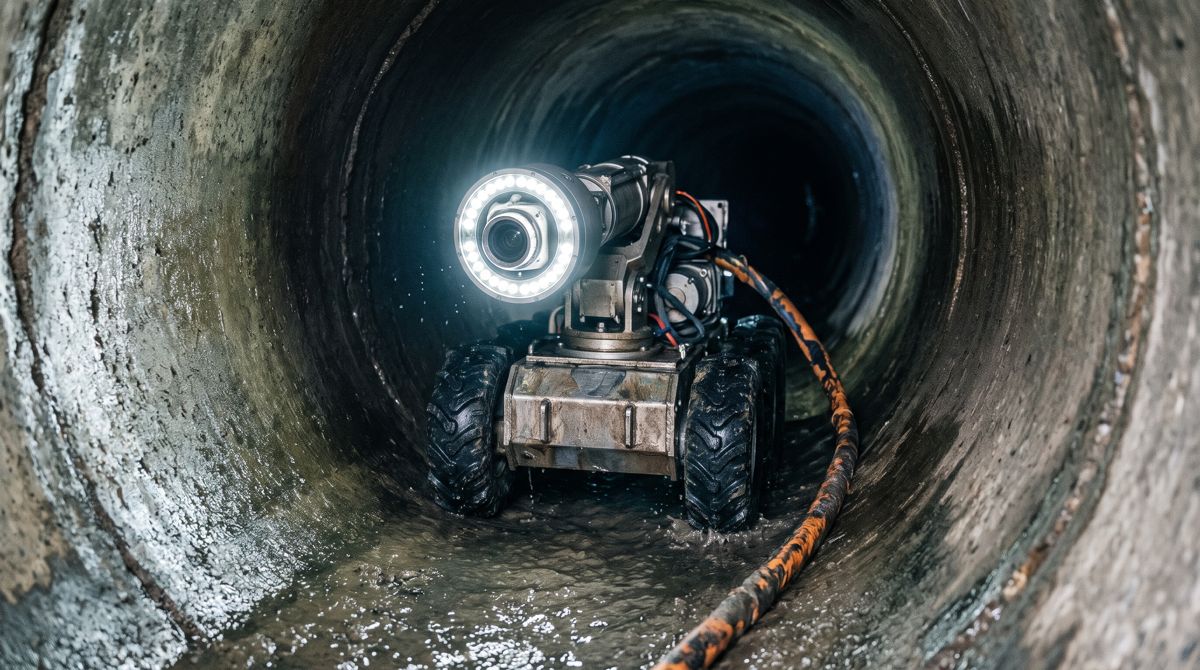
Motorized sewer inspection crawler with an LED-lit camera head driving inside a concrete sewer pipe
Motorized crawlers

Sewer crawlers with zoom and pan and tilt head

A crawler is a cable-controlled carriage that drives through the pipe on wheels, while a winch on the surface pays out and measures the cable. The head rotates and tilts to look into laterals and along the walls, and the zoom lets you read a crack without getting closer. Different wheel sets and a camera lift adapt the same carriage to very different pipes.

  • Reports with defect coding to EN 13508-2, which many municipal and utility tenders require.
  • On some models, an inclinometer for grade and laser measurement of cross-section deformation.
  • A sealed head and carriage, built to work with water and sludge at the bottom of the pipe.

Which pipe inspection camera do you need?

Tell us which diameters you run into most, how far you need to go and whether your client wants a coded report. With that we can tell whether you need a push rod system, a crawler or both, and the quote can include renting a push rod camera.

  • Push rod cameras and crawlers
  • Technical support in Italy
Technical criteria

How to choose a pipe inspection camera.

On paper many cameras look interchangeable. On site the difference comes from the camera, the cable and the reporting software, so that is where we start when we talk it through with you.

Head diameter and bends

The head has to fit the narrowest pipe you meet, and rod stiffness decides whether it gets around the bends. For 40-50 mm drains you need a small head on a thin rod, while for lines from 150 mm up a larger head with stronger lights is the better choice.

Rod length and stiffness

A rod that is too soft will not push more than a few meters in large pipes, and one that is too stiff jams in tight bends. Pick the length for the runs you actually do, because a 120 m reel is heavy and bulky even when you only use 20 m of it.

Image, lighting and self-leveling

Resolution, LED power in large dark pipes and a self-leveling head all count. The head works among water, sludge and knocks, so ruggedness and ease of repair matter as well.

Locating

The sonde in the head works with a receiver that shows where the camera is and how deep. If you also locate buried pipes and cables, check that the receiver covers the other frequencies you use.

Recording and reporting software

For private jobs, recording video and photos with distance is usually enough. Municipalities and utilities need software that codes defects to EN 13508-2 and produces the report in the format the tender asks for.

Battery, protection and transport

Battery life, the protection rating of the control unit and the weight of the reel decide how productive the tool is on site. Also ask what a replacement head costs, since it is the most exposed part.

To inspect the inside of machines, heat exchangers and components you need an industrial borescope or videoscope. Material and weld inspections are covered on the non-destructive testing page, and the other instrument categories are listed in DIPITECH solutions.

Buy, rent or outsource

Buy, rent or hire a pipe inspection service?

If you do drain cleaning, drain maintenance or sewer work every week, buying usually makes sense, because inspection becomes one more service to offer and the footage shows your client the result of the job. Contractors working on very different diameters often choose a control unit with two interchangeable reels.

Renting a push rod camera makes sense for a single site or a limited period, or to try the system before choosing. A crawler is usually built into an equipped van and chosen based on the contracts you expect. If you only need one coded survey of a network, hiring a company that offers the service is the better route.

The DIPITECH approach

From factory drains to trunk sewers.

We start with what you inspect and for whom: a push rod system often handles the drains of a factory, while a trunk sewer for a utility needs a crawler and coded reports.

What to send us for an assessment

  • Smallest and largest pipe diameters.
  • Typical length of the runs to inspect.
  • Type of work: drains, sewers, chimney flues, industrial lines.
  • Whether you need to locate from above.
  • Whether your client requires a coded report.
  • Whether you prefer to buy or rent.
FAQ

Pipe inspection camera FAQ

How much does a pipe inspection camera cost?

It depends mostly on the type of system, the cable length, the quality of the head and the software. A 30 m push rod camera for drains costs far less than a crawler with a motorized winch, zoom and defect coding software. Tell us which pipe sizes and lengths you inspect and we will send a quote for the right configuration. For a limited period, ask us about renting a push rod camera too.

What is the difference between a push rod camera and a crawler?

A push rod camera goes into the pipe on a semi-rigid rod pushed by hand, gets around tight bends and is used mostly on drains and lines up to 150-200 mm. A crawler is a motorized carriage that travels hundreds of meters through pipes from 100-150 mm up, with a pan and tilt head and zoom. The first is the everyday tool of drain cleaners and plumbers, the second is for sewer networks and contracts that require coded reports.

How do you find the exact spot of a break from above?

With the sonde built into the camera head or the crawler. When the image shows the defect you stop and search for the signal from above with a receiver, which shows where the head is and how deep. The cable counter gives you the distance from the entry point.

Can the same camera be used to inspect a chimney flue?

Yes, if the head is small enough and the rod flexible enough for the bends in the flue. Soot darkens the walls and dirties the lens, so lighting and how easily you can clean the head matter. Contractors who mostly work on chimneys often choose a dedicated lightweight reel.

What is EN 13508-2 defect coding?

It is the European standard that defines the codes used to describe what you see during visual inspection of drains and sewers outside buildings, such as cracks, deformation, roots, infiltration and defective laterals. Many municipalities and utilities require it in their tenders, because it makes reports comparable and lets them rate the condition of the network.

What is the difference between a pipe inspection camera and an industrial borescope?

A pipe inspection camera is built for pipes and sewers, with cables tens or hundreds of meters long and rugged heads that work in water and sludge. An industrial borescope, also called a videoscope, has a thin probe a few millimeters across, often articulating, and is used to look inside machines, engines, heat exchangers and components.

How do I request a quote?

Message us on WhatsApp, by email or through the form, with pipe diameters and lengths, the type of work, whether you need locating and whether your client requires a coded report. We reply within 24 hours with the right configuration and a quote.

Application support

Support with your choice, before and after you buy.

We help you choose a pipe inspection camera for the work you do, and you have technical support in Italy after purchase or during rental.

Contact

Let’s find the right pipe inspection camera for your work.

Pipe sizes, run lengths and a few photos of a typical job are enough for us to suggest a sensible configuration along with a quote.

Application request

Tell us which pipes you inspect.

Describe diameters, lengths and type of work; add photos or footage if you have them.

WhatsApp