Solutions • Safety • Confined spaces • ATEX

Portable multi-gas detector for confined spaces and ATEX zones.

A portable gas detector warns you before the atmosphere becomes dangerous from lack of oxygen, flammable gas or toxic gas. Sensors, ATEX marking and accessories have to match the real environment, from tanks and manholes to plant shutdowns and hot work, and we help you get that match right.

Reply within 24 hours · Purchase or rental · Technical support in Italy

In short

What is a portable gas detector?

It is an instrument you wear or hold to continuously measure the concentration of one or more gases in the air you breathe. When a reading exceeds the set threshold it alerts you with audible, visual and vibrating alarms. In industry the most common model is the four-gas monitor, covering oxygen, flammable gas, hydrogen sulfide and carbon monoxide.

We help you choose the right gas detector: reply within 24 hours

How much does a portable gas detector cost?

A single-gas CO monitor and a multi-gas unit with pump, PID and zone 0 certification are priced very differently. Tell us where you will use it and which gases concern you, and we will send you a quote for the right sensor configuration, with a bump test station if you need one.

  • Reply within 24 hours
  • Purchase or rental
  • Technical support in Italy
Gas detection

How a multi-gas detector works.

Inside the instrument each gas has its own sensor. Electrochemical cells measure oxygen and toxic gases, a catalytic or infrared sensor measures flammable gas as a percentage of the lower explosive limit (LEL), and a photoionization detector (PID) picks up volatile organic compounds at a few parts per million. The electronics compare each reading with the alarm set points and log data for the whole shift.

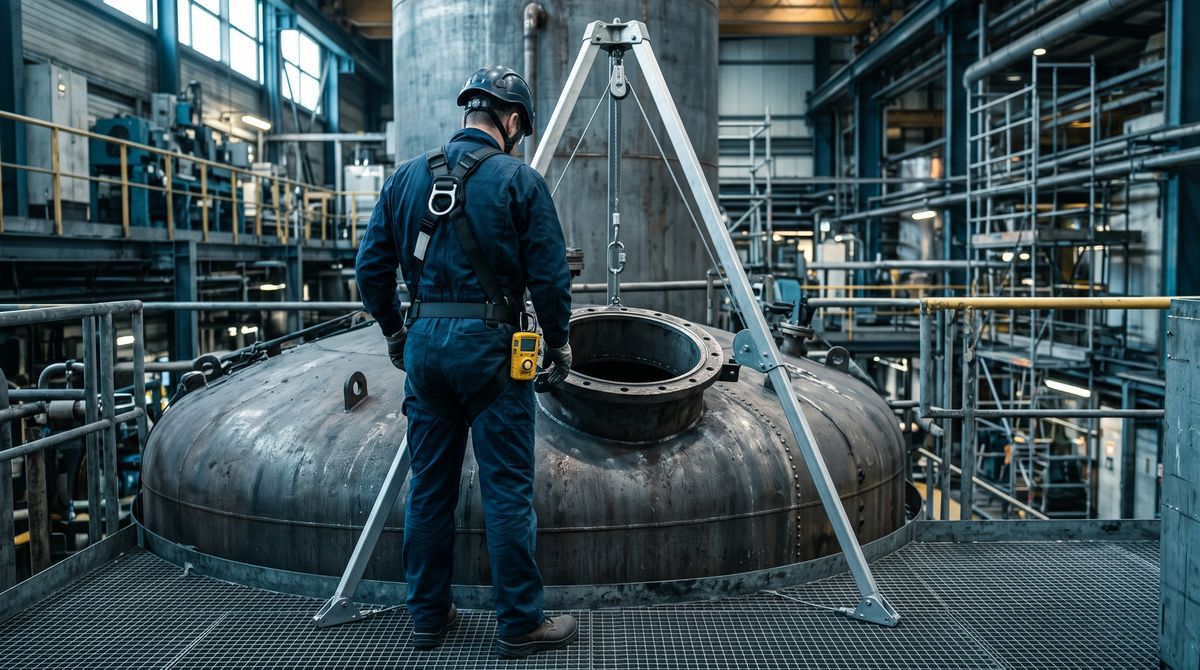
Worker with harness and portable multi-gas detector at the manhole entrance of an industrial tank
Confined spaces

The atmosphere is tested before entry and throughout the job

In tanks, vessels, manholes and sewers oxygen can run short and gases collect where you least expect them. Before entry you sample from outside with a pump and a tube at several heights, because heavy gases settle at the bottom and light ones rise. During the job the detector stays on the worker, close to the breathing zone.

  • Pump and probe sampling before entry, at several heights inside the space.
  • Continuous monitoring during the job, with vibrating alarms you notice even with ear defenders on.
  • Log of readings and alarms to attach to the work permit.
Choosing the instrument

Single-gas, multi-gas, pumped or with PID: which detector do you need?

The choice starts from the gases that may be present and from how you work. The table compares the most common configurations in industry.

Comparison of single-gas detector, four-gas monitor, pumped multi-gas detector, multi-gas detector with PID and infrared flammable gas sensor
ConfigurationWhat it detectsWhen it is usedStrengthsLimits
Single-gasOne gas only, such as CO, H₂S or O₂A known single hazard, such as CO near engines or H₂S in wastewaterSmall and affordable, fixed-life models with no sensor or battery to replaceDoes not protect you from other gases
Four-gas monitorO₂, flammable gas, H₂S and COConfined spaces, petrochemicals, wastewater plants, maintenance shutdownsCovers the most common hazards with one instrumentOther toxic gases need dedicated sensors
Pumped multi-gasThe same gases, sampled remotely through a tubePre-entry checks in tanks, wells and tunnelsYou test without going inSlower response with long tubes, filters to check
Multi-gas with PIDVOCs too, at ppm levelSolvents, fuels, remediation, chemicalsSees toxic vapors far below the explosive limitMore delicate sensor, read with the gas response factors
Infrared flammable gas sensorHydrocarbons and CO₂ in % LEL or % by volumeOxygen-deficient areas or sites with substances that poison catalytic sensorsWorks without oxygen and cannot be poisonedDoes not detect hydrogen

For confined space entry, the baseline configuration is a four-gas monitor with a built-in or external pump. If your plant handles solvents or heavy hydrocarbons, adding a PID is worth it, because the flammable gas sensor reads in % LEL and cannot see concentrations that are already harmful to health.

Applications

Where portable gas detectors are used.

Confined spaces

Tanks, silos, vessels, pits, tunnels and sewers. In Italy, Presidential Decree 177/2011 requires companies working in these spaces to have procedures, training and suitable equipment, and atmospheric testing is one of the first checks.

Petrochemicals and oil & gas

Refineries, fuel depots and gas plants, where hydrocarbons and H₂S are present. Here you need ATEX-certified instruments for the zone you enter.

Wastewater and waste

Manholes, digesters and tanks where H₂S, methane and CO₂ build up and oxygen can drop below safe levels.

Shutdowns and maintenance

During plant shutdowns, many workers and contractors operate together on freshly cleaned equipment. It is the typical case where you need many instruments for a few weeks.

Hot work

Before welding or cutting near equipment that has held flammables, you check that the % LEL reading is zero or below the threshold set in the work permit.

Chemicals, pharma and labs

Solvents, ammonia, chlorine and industrial gases, with dedicated sensors and often a PID. Near systems using nitrogen or argon, oxygen depletion monitoring is also needed.

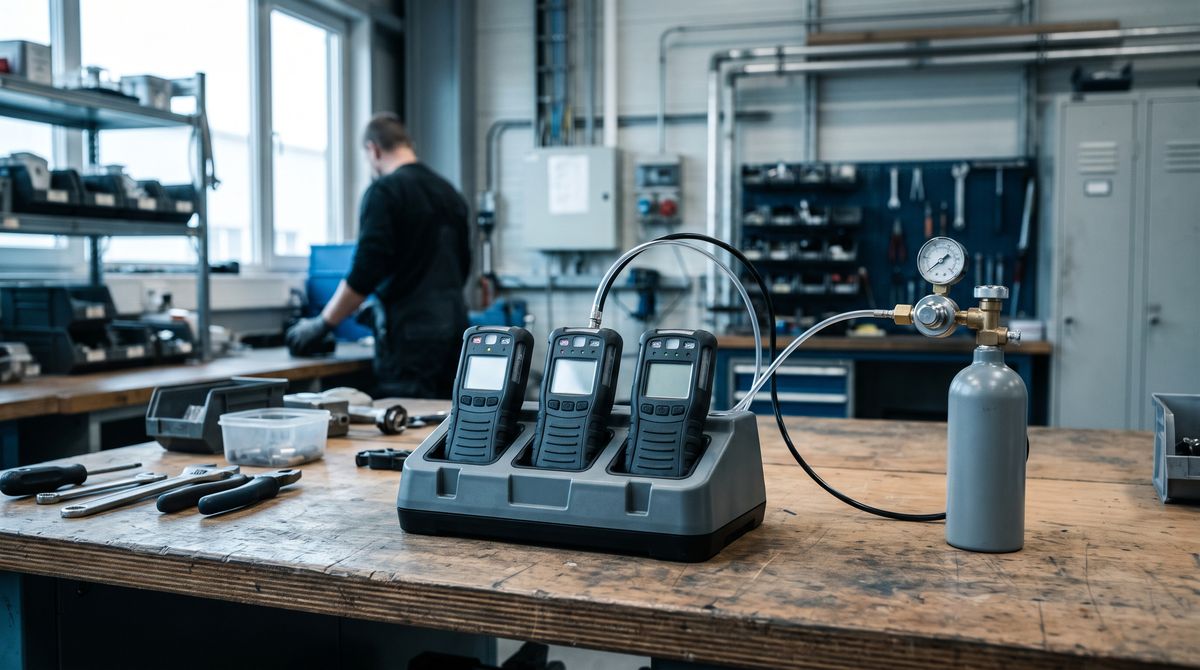
Portable multi-gas detectors in a bump test station connected to a test gas cylinder on a maintenance workbench
Bump testing and calibration

A detector is only reliable if it is tested with gas

Sensors age, get dirty and can be poisoned by silicones, lead compounds or high H₂S concentrations without the instrument showing it. That is why many manufacturers recommend a bump test with test gas before each day's use and a full calibration at regular intervals. EN 60079-29-2 gives guidance on the selection, use and maintenance of flammable gas detectors.

  • Daily bump test, by hand or with an automatic station that logs the result.
  • Periodic calibration with certified gas cylinders and a test log.
  • Sensor replacement at end of life, with different lifetimes for each sensor type.

Which gas detector do your workers need?

For a shutdown with many contractors, renting often makes more sense. Tell us how many workers go in and where, and we will prepare a quote for the number of units you need, rental included.

  • Single-gas and multi-gas
  • Technical support in Italy
Technical criteria

How to choose a portable gas detector.

The right instrument detects the gases present in your plant, is certified for the zones you enter and gets tested every day. Getting there starts with these points.

Sensors and target gases

Start from your risk assessment and the safety data sheets of the substances. Besides the four classic gases you may need SO₂, NO₂, NH₃, Cl₂, HCN or PH₃, and not every instrument accepts every sensor.

Flammable gas sensor

The catalytic sensor is affordable and detects almost all flammable gases, hydrogen included, but it needs oxygen and can be poisoned. The infrared sensor cannot be poisoned and works without oxygen, yet it does not see hydrogen.

ATEX certification

The instrument must carry a marking suited to the most severe zone you enter, for example category 1G for zone 0. Flammable gas performance is tested to EN 60079-29-1, toxic gas performance to EN 45544.

Pumped or diffusion

A diffusion detector is enough for personal protection during the job. If you need to test the atmosphere before entering, you need a pump, built-in or external, with tubes and probes of the right length.

Alarms and management

Loud, visible and vibrating alarms, adjustable set points and event logging. Some models add a man-down alarm or a wireless link to the attendant outside.

Cost over time

In the quote, consider the bump test station, gas cylinders, sensor life and calibration intervals. Across a fleet of instruments these items can weigh as much as the initial purchase.

To pinpoint where a pressurized gas leak escapes from piping and fittings there is the acoustic imaging camera, used alongside the detector. In the same departments you may also need a professional sound level meter for noise assessment. All other categories are in the DIPITECH solutions index.

Buy or rent

Buy, rent or top up your fleet for shutdowns?

For workers who enter confined spaces every week or work in plants with gas hazards, detectors are bought, one per person, and managed with a bump test and calibration program. Knowing the instrument you wear matters as much as its performance.

Renting is useful when the need is temporary, for example during a plant shutdown, a construction job or a remediation project, when you need many instruments for a few weeks. Even then it is worth asking for calibrated instruments with certificates and the same sensor configuration your workers already know.

The DIPITECH approach

The sensors follow your plant hazards.

We start from the gases that may be present and the zones you enter: a wastewater manhole and a solvent tank in zone 0 are not handled with the same setup.

What to send us for an assessment

  • Work environments: confined spaces, process plants, wastewater, shutdowns.
  • Gases that may be present, including from safety data sheets.
  • ATEX classification of the zones people enter.
  • Whether you need pump sampling before entry.
  • Number of workers and instruments already in use.
  • Whether you prefer to buy or rent.
FAQ

Portable gas detector FAQ

What is a portable gas detector used for at work?

To protect people working where flammable gas, toxic gas or low oxygen may be present, such as confined spaces, chemical and petrochemical plants, wastewater plants and maintenance sites. It measures continuously and alerts the worker as soon as a concentration exceeds the alarm set point.

How much does a portable gas detector cost?

It depends on the number and type of sensors, the pump, the PID, ATEX certification and accessories such as the bump test station. A single-gas unit costs a fraction of a fully equipped multi-gas detector, and spare sensors and calibrations belong in the budget too. Tell us the gases, environments and number of workers and we will send you a quote, rental included.

What is the difference between single-gas and multi-gas detectors?

A single-gas detector monitors one gas and is enough when the hazard is known and unique, such as carbon monoxide near engines and burners. A multi-gas detector measures four to six gases at once and is the standard for confined spaces, where you cannot know in advance what you will find.

What does % LEL mean on a gas detector?

LEL is the lower explosive limit, the minimum concentration of a flammable gas in air below which the mixture will not ignite. The detector shows the concentration as a percentage of that limit, so 10% LEL means one tenth of the dangerous concentration. For methane, 100% LEL corresponds to about 4.4% by volume.

What is a bump test and how often should it be done?

It is a quick test where you expose the instrument to a gas of known concentration to confirm that the sensors respond and the alarms go off. Many manufacturers recommend it before each day's use, while full calibration is done at longer intervals set by the manufacturer and company procedures.

Which detector do I need for ATEX zones?

You need an instrument certified under the ATEX directive for the zone you enter, with the right category and gas group. Zone 0 requires a category 1G device, usually intrinsically safe. Send us your area classification and we will check the model's marking with the manufacturer.

How do I request a quote?

Message us on WhatsApp, by email or through the form with the work environments, the gases that may be present, the ATEX zones and how many workers you want to equip. We reply within 24 hours with the right configuration and a quote.

Application support

Support with your choice, before and after you buy.

We help you choose a gas detector based on the hazards in your plant, with technical support in Italy whether you buy or rent.

Contact

Let’s find the right gas detector for your workers.

List the gases you may run into and the zones you enter, for a confined space crew or a shutdown, and we prepare the configuration and a quote.

Application request

Tell us what you need to check.

Describe what you are looking for and where; add photos or plant data if you have them.

WhatsApp