Solutions • Noise • Workplace safety

Professional class 1 sound level meter to measure noise at your plant.

A class 1 sound level meter has the accuracy needed for noise risk assessment, environmental noise and machinery checks. We work out with you whether you need an integrating meter, an octave band analyzer or a noise dosimeter, calibrator and calibration included.

Reply within 24 hours · Purchase or rental · Technical support in Italy

In short

What is a sound level meter?

It is the instrument that measures sound pressure level in decibels. A measurement microphone picks up the sound, the electronics apply frequency weightings (A, C, Z) and time weightings, and an integrating meter also calculates the equivalent level over the whole measurement period. Accuracy requirements are set by IEC 61672-1, which splits instruments into class 1 and class 2.

We help you choose the right sound level meter: reply within 24 hours

How much does a professional sound level meter cost?

A class 2 integrating meter and a class 1 analyzer with third-octave bands and audio recording are priced very differently. Tell us what you need it for and we will send you a quote for the right configuration, with calibrator and calibration certificate.

  • Reply within 24 hours
  • Purchase or rental
  • Technical support in Italy
Noise measurement

How a professional sound level meter works.

The heart of the instrument is a condenser microphone, which turns air pressure fluctuations into an electrical signal. The meter filters it with A-weighting, which mimics the sensitivity of the human ear, or with C-weighting for peaks, and averages it over time. An integrating meter adds up the sound energy over the whole measurement and returns the LAeq, the value used to calculate daily exposure.

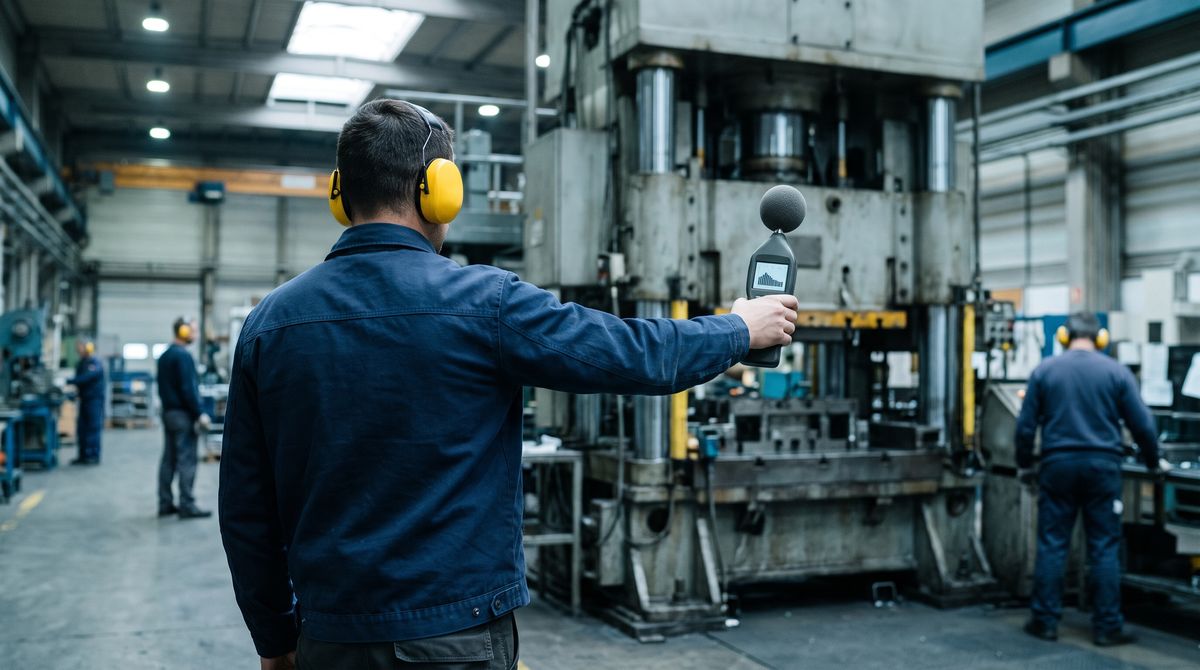
Technician wearing ear defenders measuring noise near a press on the shop floor with a professional sound level meter and windscreen
Workplace noise

From shop floor readings to daily exposure

For risk assessment you measure LAeq at workstations or during individual tasks, along with the C-weighted peak, and then calculate exposure normalized to eight hours. The method is described in ISO 9612 and, in Italy, in UNI 9432, which also explains how to handle measurement uncertainty.

  • Measurements by workstation, by job or by full-day sampling, depending on the strategy chosen.
  • C-weighted peak for impulsive noise from presses, nail guns and hammers.
  • Octave band analysis to choose hearing protectors that match the real noise in the department.
Choosing the instrument

Class 1 or class 2, integrating meter, analyzer or dosimeter?

The term sound level meter covers instruments with different uses. The table helps you see which one your measurement needs and when it is worth adding a personal noise dosimeter.

Comparison of class 2 sound level meter, class 1 integrating meter, octave band analyzer and personal noise dosimeter
InstrumentWhat it measuresWhen it is usedStrengthsLimits
Class 2 sound level meterWeighted levels and LAeq with wider tolerancesInternal checks, quick surveys, screeningLower cost, easy to useWider tolerances, narrower frequency range and operating temperatures
Class 1 integrating sound level meterLAeq, maximum and minimum levels, C-weighted peakNoise risk assessment, environmental noise, machinery checksReference accuracy for measurements with technical weightCosts more and needs regular calibration
Octave and third-octave analyzerNoise spectrum on top of overall levelsHearing protector selection, noise control, machineryShows you which frequencies to tackleMore features to learn and pay for
Personal noise dosimeterExposure of a single worker over the shiftMobile jobs, forklift drivers, maintenance staffFollows the worker wherever they goMicrophone exposed to knocks and rubbing, requirements in IEC 61252

For a noise risk assessment under Italian occupational safety law (Legislative Decree 81/2008), the safest choice is a class 1 integrating meter with octave bands, together with an acoustic calibrator. A dosimeter becomes useful when people move around a lot and you cannot rebuild exposure by workstation. Class 2 remains fine for internal checks between one assessment and the next.

Applications

Where professional sound level meters are used.

Noise risk assessment

Legislative Decree 81/2008, Title VIII Chapter II, sets action values at 80 and 85 dB(A) and the limit value at 87 dB(A) of daily exposure, with the matching peak values. The measurement tells you which band each job falls into and which obligations apply.

Environmental noise

Noise leaving the plant is assessed under Italian Law 447/1995 and the Ministerial Decree of March 16, 1998, which requires class 1 instruments. These measurements are signed by a qualified acoustics technician listed in the national register.

Machinery noise

Manufacturers and users measure the noise emission of machines and systems for the data required by machinery regulations and to verify results after an intervention.

Hearing protector selection

With an octave band spectrum you can apply the octave band method in EN 458 and choose protectors that really attenuate the noise in the department, without over-isolating workers.

Noise control

Before and after enclosures, barriers or silencers you need comparable measurements to prove the result. Repeatability and frequency analysis matter most here.

Buildings and acceptance tests

Sound insulation of walls, offices and control rooms, and building services noise. These often need dedicated functions and a test sound source.

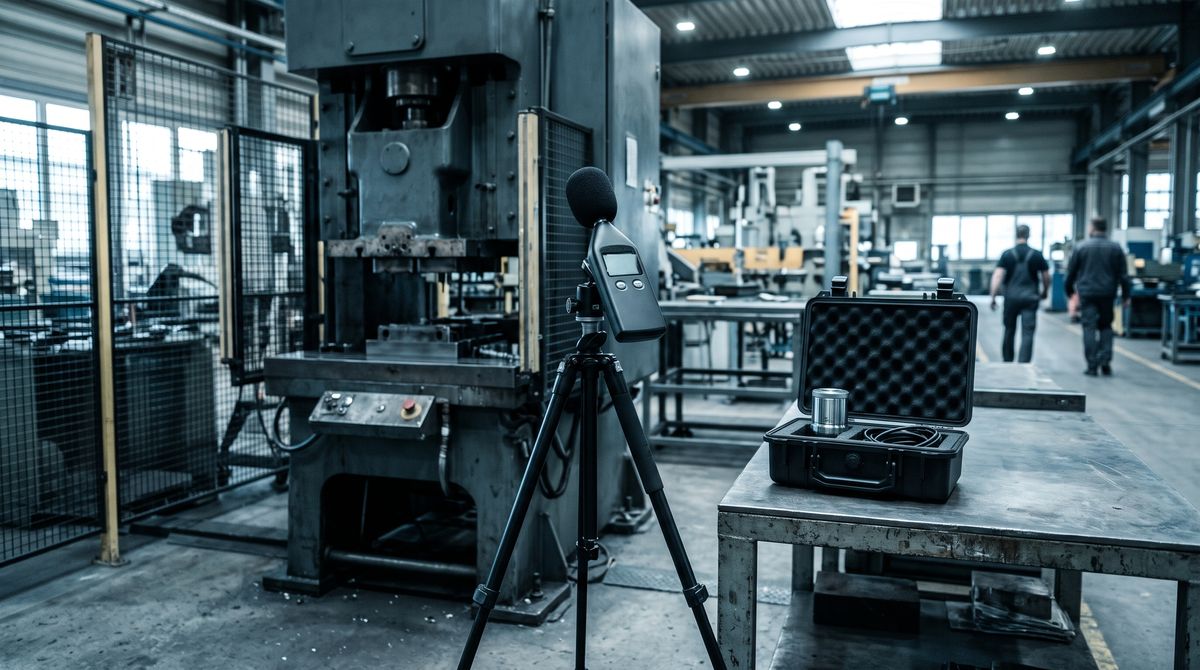
Sound level meter on a tripod with windscreen in a production hall next to a press, with an acoustic calibrator in the case nearby
Calibration and field checks

Field check before and after every measurement, lab calibration on schedule

Before and after each series of measurements, you check the meter with an acoustic calibrator compliant with IEC 60942. For environmental noise, the Ministerial Decree of March 16, 1998 accepts measurements when the two checks differ by less than 0.5 dB and requires instruments to be checked at least every two years at an accredited lab, which in Italy means LAT centers.

  • An acoustic calibrator of the right class for the meter, always in your kit.
  • LAT calibration certificate for both meter and calibrator, with the due date tracked.
  • Windscreen, tripod and extension cable for outdoor measurements or awkward positions.

Which sound level meter does your measurement need?

If you update your assessment every four years, renting a calibrated class 1 meter may be enough. Tell us which measurements you need and get a quote to buy or rent.

  • Class 1 and class 2
  • Technical support in Italy
Technical criteria

How to choose a professional sound level meter.

The accuracy class is the first filter but not the only one, and before suggesting an instrument we also look at these points with you.

Accuracy class

Class 1 under IEC 61672-1 has tighter tolerances, a wider frequency range and operates from -10 to +50 °C. It always pays off for measurements with technical or legal weight, and environmental noise requires it.

Measured quantities

LAeq, LCpeak, maximum and minimum levels, statistical levels and, for environmental noise, detection of tonal and impulsive components. Check that the meter logs them all in parallel, so a single measurement is enough.

Frequency analysis

Octave and third-octave bands to IEC 61260-1 are needed for hearing protectors, noise control and tonal components. On many models they are a software option you can enable after purchase.

Dynamic range and microphone

A wide measuring range spares you from switching scales between background noise and the hit of a press. The microphone must suit the sound field you measure in and be protected by a windscreen outdoors.

Recording and software

Audio recording helps you identify afterward what caused a peak. Also consider how quickly you get from measurements to the exposure calculation and the report.

Calibration and calibrator

In the quote, look at the acoustic calibrator, the initial calibration certificate and the cost of later calibrations at a LAT center. On a class 1 meter these are part of the real cost of the instrument.

If besides measuring how much noise there is you need to find where it comes from, an acoustic imaging camera shows you the source on the image. To check the atmosphere in confined spaces there is the portable gas detector. You will find the other categories in the solutions index.

Buy, rent or outsource

Buy, rent or hire an outside specialist?

If you carry out noise assessments on a regular basis, as a consultant or as the safety department of a group with several sites, a class 1 meter is worth buying and keeping calibrated. You use it often, and knowing your own instrument well reduces measurement errors.

For a company that updates its assessment every few years, renting or hiring qualified outside staff is often the more sensible option. For environmental noise, measurements must in any case be signed by a qualified acoustics technician.

The DIPITECH approach

Every measurement has its meter.

Shop floor exposure is measured with a dosimeter or an integrating meter, noise toward the neighbors with an outdoor kit and long recordings, a machinery check with frequency analysis. That is why we first ask what the measurement is for.

What to send us for an assessment

  • Purpose of the measurement: noise risk, environmental noise, machinery, buildings.
  • Number of departments, workstations and jobs to assess.
  • Whether you need octave or third-octave bands.
  • Whether there is strong impulsive noise, such as presses or hammers.
  • Instruments you already have and date of the last calibration.
  • Whether you prefer to buy or rent.
FAQ

Sound level meter FAQ

What is a professional sound level meter used for?

To measure noise within tolerances set by a technical standard, for worker risk assessment, environmental noise leaving the site, machinery emission and checks after noise control work. The accuracy class and calibration are what make the measurement usable in a technical report.

How much does a professional sound level meter cost?

It depends on the accuracy class, frequency analysis features, audio recording and software. A class 2 meter for internal checks costs much less than a full class 1 analyzer, and the calibrator and calibrations belong in the budget too. Tell us what you need it for and we will send you a quote, rental included.

What is the difference between a class 1 and a class 2 sound level meter?

Both classes are defined by IEC 61672-1. Class 1 has tighter tolerances, especially at very low and very high frequencies, and keeps its performance over a wider temperature range. Environmental noise requires class 1, and for workplace risk assessment it is the more prudent choice.

What is an integrating sound level meter?

It is a meter that, besides the instantaneous level, adds up sound energy over time and calculates the equivalent continuous level, the LAeq. Daily worker exposure is derived from that value, so a risk assessment always calls for an integrating meter.

Who can carry out a workplace noise assessment in Italy?

Legislative Decree 81/2008 requires the assessment of physical agent risks to be carried out by qualified staff within the prevention and protection service, at least every four years and whenever conditions change significantly. Environmental noise, on the other hand, requires a qualified acoustics technician.

How often should a sound level meter be calibrated?

Before and after every measurement you check it with the acoustic calibrator. In the lab, common practice is calibration at least every two years, which the Ministerial Decree of March 16, 1998 requires for environmental noise, carried out at an accredited LAT center for both the meter and the calibrator.

How do I request a quote?

Message us on WhatsApp, by email or through the form with the purpose of your measurements, how many departments or workstations you need to assess, whether you need frequency analysis and whether you prefer to buy or rent. We reply within 24 hours with the right instrument and a quote.

Application support

Support with your choice, before and after you buy.

We help you choose a sound level meter for the measurement you need to make, and for questions on settings and reports you get technical support in Italy, whether you buy or rent.

Contact

Let’s find the right sound level meter for your measurements.

Tell us what the measurement is for, noise risk on the shop floor or noise toward the neighbors, and we suggest the instrument along with a quote.

Application request

Tell us what you need to check.

Describe what you are looking for and where; add photos or plant data if you have them.

WhatsApp