LANScientific analyzers: TrueX XRF for PMI and LIBS for carbon.
Two families of handheld instruments for metal analysis, distributed in Italy by DIPITECH. The TrueX XRF analyzers identify the alloy without damaging the part (Positive Material Identification), while the LIBS 820C/830C units measure carbon and light elements and, with the 830C, separate L grades such as 304 and 304L.
XRF for the alloy grade, LIBS when you need carbon.
Manufacturer: LANScientificLANScientific Co., Ltd — represented and distributed in Italy by DIPITECH Industrial Solution
LANScientific manufactures handheld analyzers for material analysis. For Positive Material Identification (PMI), the TrueX XRF analyzers identify the alloy in seconds and non-destructively across a wide element range. LIBS units, on the other hand, measure carbon, which XRF cannot see, and become essential when two grades differ only in C content. We help you work out which technique your inspection needs, or whether you need both, with technical and commercial support in Italy.
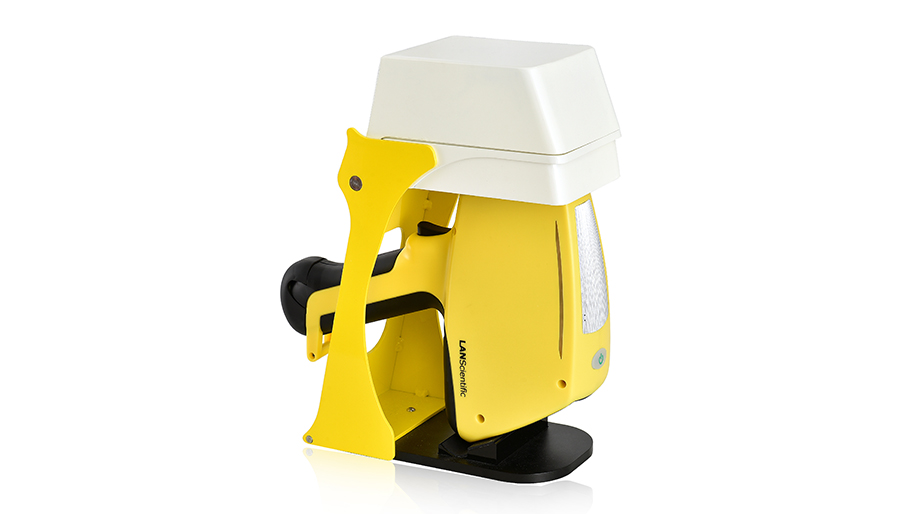
The two models differ in their detector. On the TrueX 800 it is a Si-PIN BOOST, on the TrueX 860 a high-sensitivity SDD with Peltier cooling, so no liquid nitrogen is needed. DoubleBeam technology reduces operator exposure, and the series suits PMI, material inspection, precious metals and RoHS compliance checks.
DoubleBeam technology for operator radiation safety
Weight / runtime: 1.5 kg / about 8 h
Display and storage: 4.3" touchscreen, 32 GB
Connectivity: USB, Wi-Fi and Bluetooth, with hard case
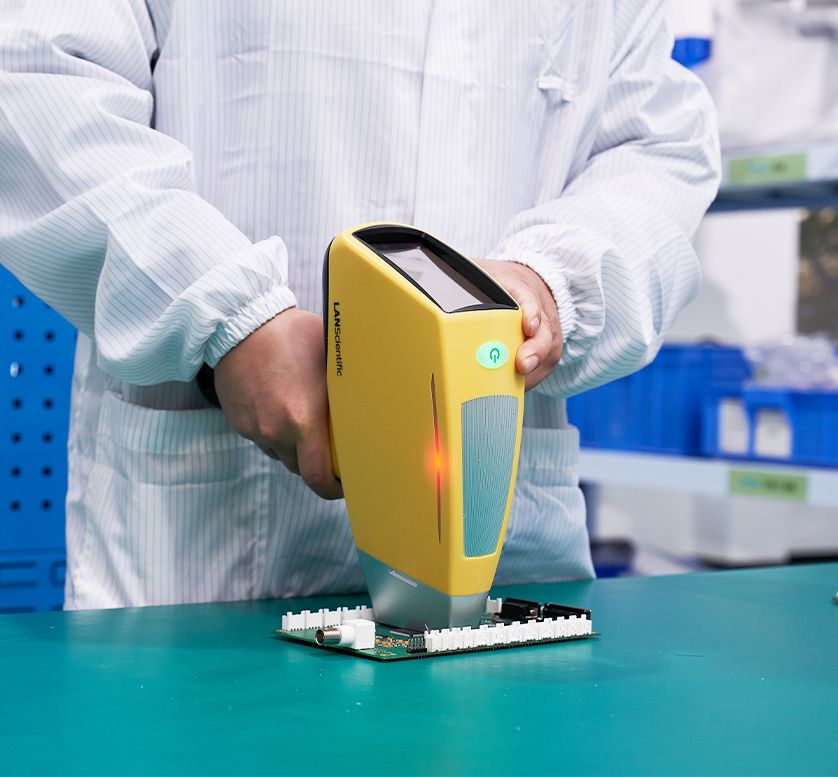
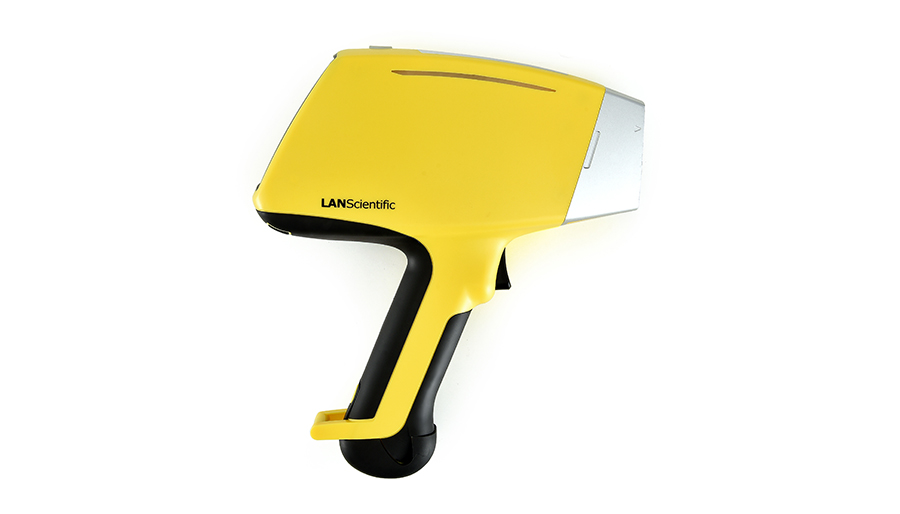
TrueX in use: material verification on electronicsTrueX: view of the handheld unit
Of the two, the TrueX 860 is the one to choose when lower detection limits matter.
LIBS series • Carbon and light elements
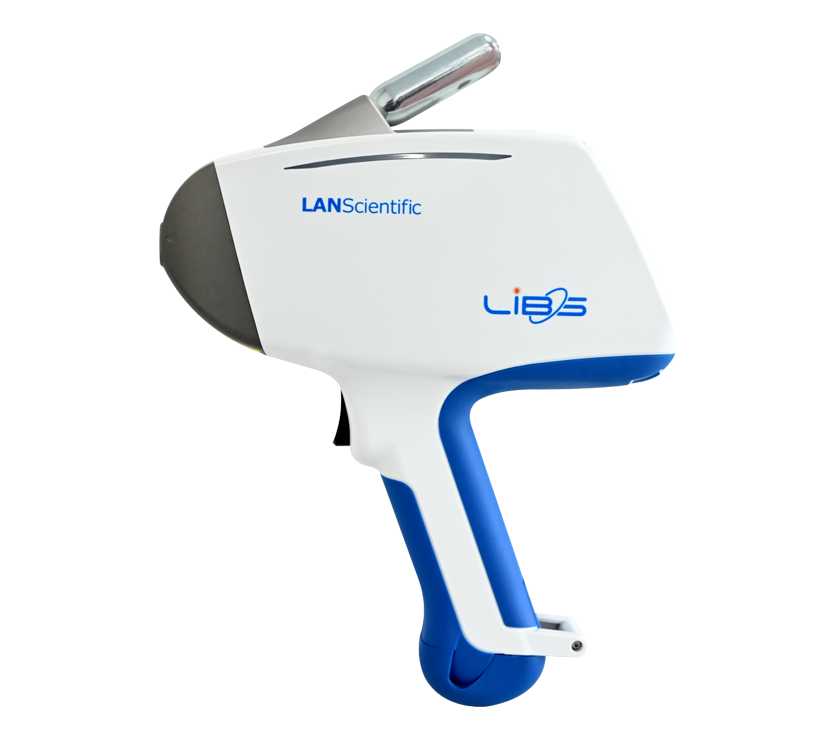
LANScientific LIBS 820C / 830C — carbon measurement on site
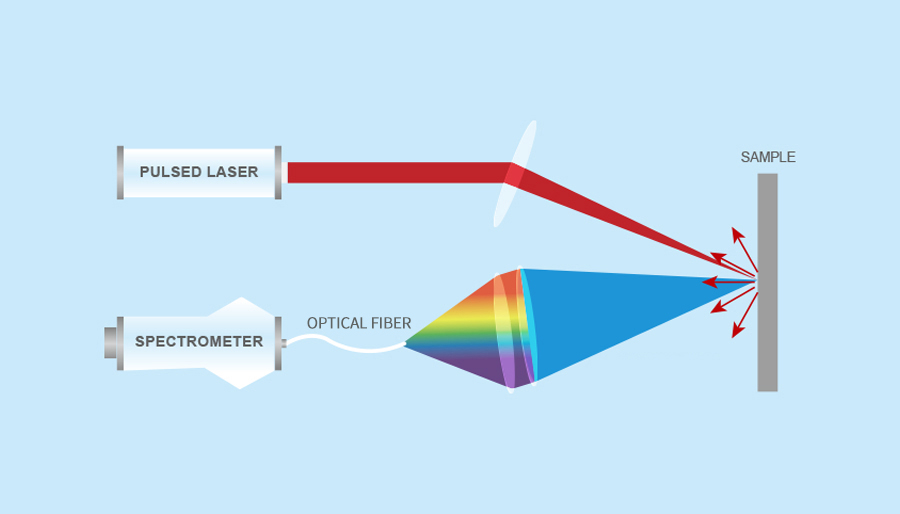
LIBS (Laser-Induced Breakdown Spectroscopy) vaporizes a tiny amount of metal with a laser pulse and reads the light emitted by the plasma, so it also measures light elements and, above all, carbon. For low and medium alloy steels there is the LIBS 820C. The LIBS 830C works on stainless steels instead and reaches a carbon detection limit of 0.01%, enough to separate the L grades (304/304L, 316/316L) in the field. Results come in 3 seconds, and the micro-destructive measurement runs under an argon flow.
Carbon LOD 830C: 0.01% (stainless steels) → distinguishes L grades
Analysis result in 3 seconds
Measurement under argon, micro-destructive technique
Weight / runtime: 1.7 kg with battery / about 8 h per set
Screen: 4.3" touchscreen with 32 GB of storage
Operating temperature: 0 to 40 °C
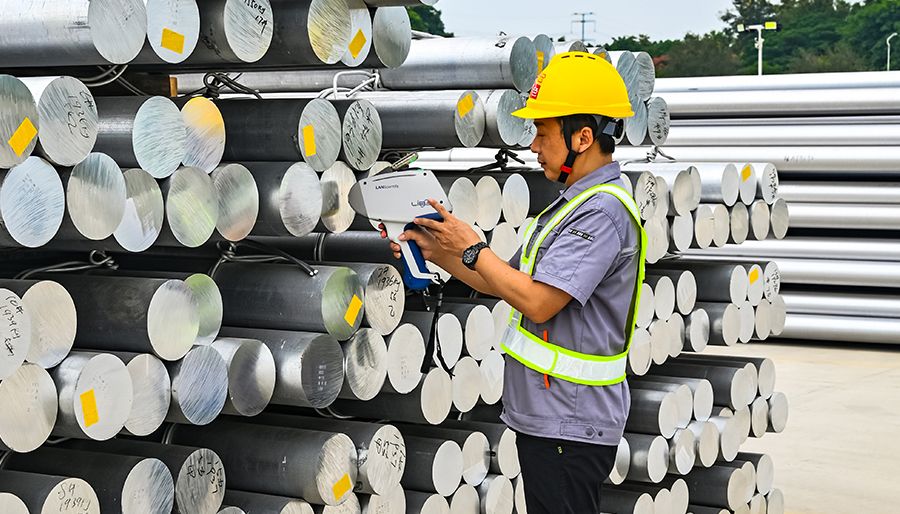
LIBS in the field: verification on metal semi-finished productsHandheld LIBS for carbon measurement
If you are not sure whether you need the 820C or the 830C, tell us the steel grades you have to check and we will tell you.
Identified materials
Metals and alloys LANScientific analyzers recognize.
Together, TrueX XRF and LIBS cover the metal families most widely used in industry, carbon included, for quality control, supplier verification and material traceability.
Steels
Stainless steels of the 200, 300 and 400 series, carbon, low-alloy and tool steels. Carbon content is measured with LIBS.
L grades and welds
With the LIBS 830C you can separate the L grades (304/304L, 316/316L), a check that helps prevent sensitization and intergranular corrosion in welded areas.
Nickel and cobalt alloys
Superalloys and nickel and cobalt alloys, identified by grade on critical components and high-temperature equipment.
Titanium and aluminum
Titanium, aluminum and magnesium alloys. TrueX measures from magnesium upward, while LIBS reaches down to carbon.
Copper, brass and bronze
Copper, brass, bronze and zinc, to be checked in foundries, in metal fabrication and in recycling.
Precious metals and ferroalloys
Precious metals with the TrueX, plus ferroalloys and welding filler metals when inspecting consumables and semi-finished products.
The TrueX XRF series determines the elemental composition non-destructively but does not measure carbon (C). The fluorescence X-rays of such a light element have too little energy and are absorbed by the air and the detector window before they can be measured. That is why grades such as 304 and 304L or 316 and 316L, which differ only in carbon content, cannot be separated with XRF alone. With the LIBS 830C, carbon is measured down to 0.01% and the L grades can be told apart directly in the field. Used together, the two techniques give you full PMI and carbon verification from a single supplier, and we will point you to the right method for the inspection you need to run.
The table summarizes technique, measured elements and typical use of each model. Price depends on the configuration, so you will find it in the quote we prepare for your application.
Model
Technique
Elements / carbon
Notes
TrueX 800
Handheld XRF
Mg (Z12) → U (Z92)
Si-PIN BOOST detector, PMI and alloy ID
TrueX 860
Handheld XRF
Mg (Z12) → U (Z92)
High-sensitivity SDD, Peltier, low LODs
LIBS 820C
Handheld LIBS
C down to 0.1% + light elements
Low/medium alloy steels, result in 3 s
LIBS 830C
Handheld LIBS
C down to 0.01% + light elements
Stainless steels, distinguishes L grades (304/304L)
The choice between XRF and LIBS, along with accessories and options, depends on the materials, the elements to measure and what the inspection has to prove. The manufacturer’s official documentation is on en.lanscientific.com.
FAQ
Frequently asked questions about LANScientific analyzers
What is the difference between the TrueX XRF series and LIBS?
TrueX units are handheld XRF analyzers that identify the alloy non-destructively across the magnesium-to-uranium range and are used for PMI, precious metals and RoHS checks. LIBS 820C and 830C units use laser-induced breakdown spectroscopy and measure light elements and, above all, carbon, which XRF cannot detect. To tell L grades such as 304/304L or 316/316L apart, you need the 830C.
Does LANScientific LIBS really measure carbon?
Yes. The LIBS 820C has a carbon detection limit of 0.1% on low and medium alloy steels, the 830C of 0.01% on stainless steels. The 830C can tell the L grades apart in the field, something XRF alone cannot do because they differ only in carbon content.
Is LIBS measurement destructive?
It is micro-destructive, because laser ablation leaves a minimal mark on the surface, practically invisible to the naked eye. The argon flow improves signal quality. By contrast, the TrueX XRF leaves no mark at all.
Which materials do LANScientific analyzers identify?
Stainless, carbon, low-alloy and tool steels, nickel, titanium, cobalt, aluminum, magnesium, copper (brass and bronze) and zinc alloys, plus ferroalloys. The TrueX covers magnesium to uranium for PMI and precious metals, while LIBS adds carbon and light elements.
How do I request a quote for a LANScientific analyzer?
Tell us the materials and alloys to check, whether you need to measure carbon or distinguish L grades, the elements of interest, the working environment and the expected number of tests. We guide your choice between TrueX XRF and LIBS 820C/830C and reply within 24 hours. You can use the form below, WhatsApp or email.
Application support
Help with selection and first use.
We support you from choosing between XRF and LIBS through the first measurements with the instrument, whether the inspection covers PMI, carbon or both.
Configuration
Choice between TrueX XRF and LIBS 820C/830C, elements to measure, accessories and options based on the materials you inspect.
First use
Hands-on support during the first measurements and while fitting the instruments into your material inspection procedure.
Training and safety
Operator training, the manufacturer’s guidance for working safely with the X-ray tube and the LIBS laser, and direct contact with LANScientific for service and spare parts.
Contact
Let’s talk about what you need to measure, alloy or carbon.
If you need to buy or evaluate an XRF analyzer for PMI or a LIBS unit for carbon, DIPITECH Industrial Solution, the LANScientific distributor in Italy, helps you clarify the requirement, choose between TrueX and LIBS and reach the right configuration.
Application request
Tell us what you need to analyze.
Include the materials and alloys to check, whether you need to measure carbon or distinguish L grades, the elements of interest and the working environment.
Newsletter
Subscribe for industrial technology updates.
Updates on non-destructive testing, material analysis, industrial automation and robotics.