Material Analysis • XRF • PMI

PMI analyzer: handheld XRF for alloy identification and material verification.

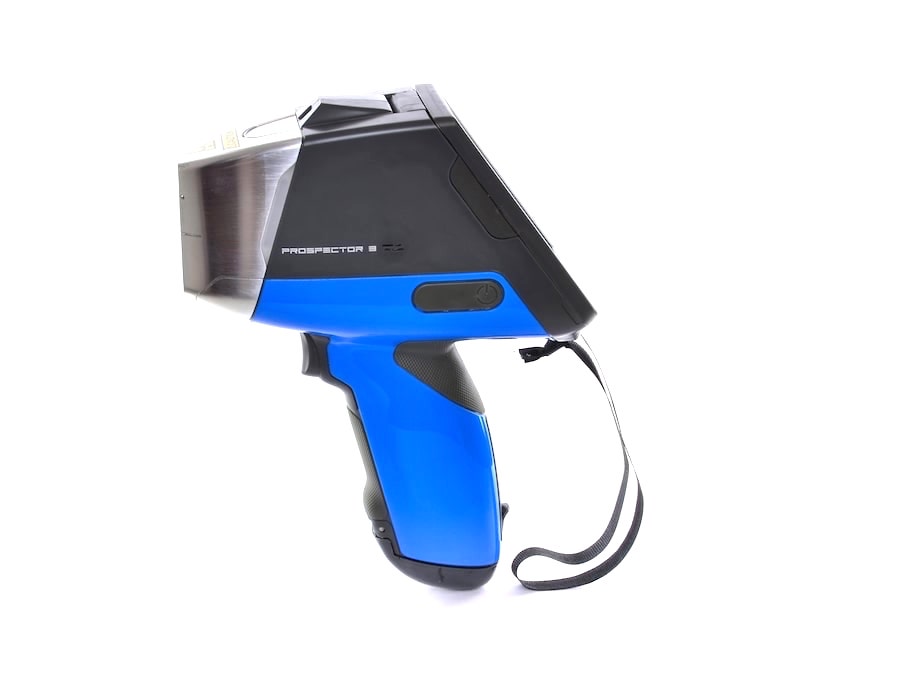
Handheld PMI analyzers for material analysis, alloy identification, incoming inspection, positive material identification, supplier verification and industrial traceability.

Tailored quote within 24h · Test on your own material, no obligation · Technical support in Italy

Want to know how much a handheld XRF/PMI analyzer costs?

We prepare a tailored quote within 24 hours and arrange a test on your own material, at no obligation.

  • Reply within 24h
  • Test on your own material
  • Technical support in Italy
  • Technical partner
XRF / PMI

Solution and application configuration.

A dedicated technology page focused on industrial application, selection criteria and DIPITECH technical-commercial support.

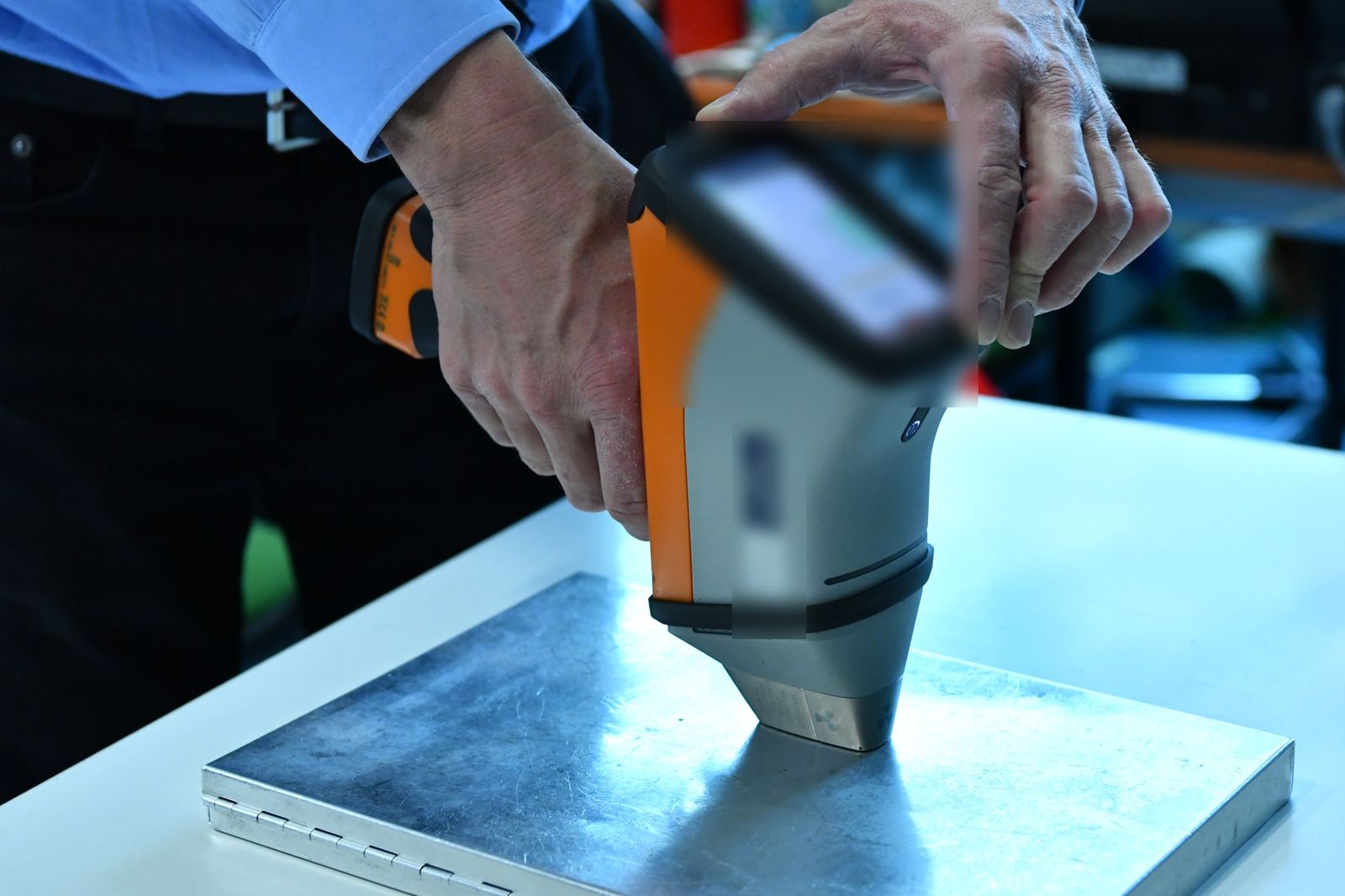
portable XRF PMI analyzer for material analysis
XRF / PMI

Portable XRF/PMI analyzers for material control

XRF/PMI analyzers support fast alloy identification and material verification, helping quality, production, maintenance and supply chain teams avoid material mix-ups.

  • Alloy identification and incoming material control.
  • Support for quality, production, maintenance and supply chain.
  • Application evaluation according to material, elements of interest and workflow.
Our products

Discover the products we distribute

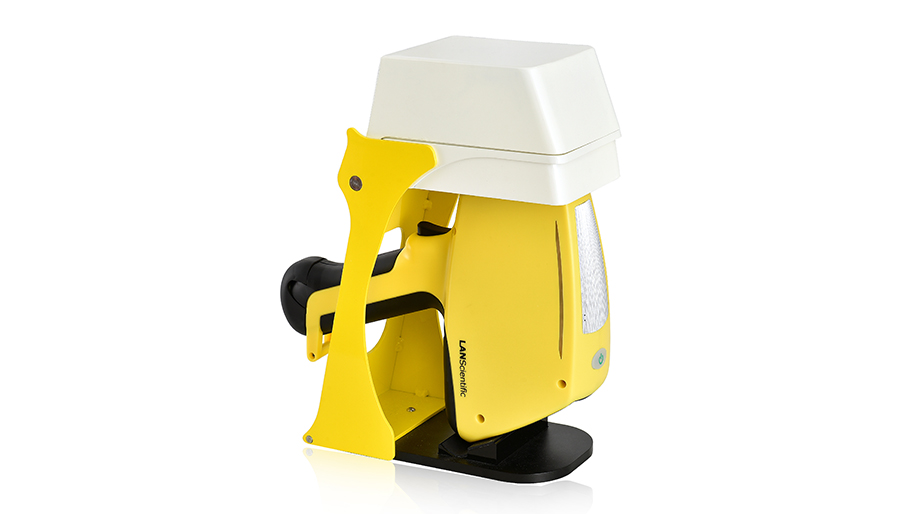
The XRF/PMI and LIBS analyzers represented by DIPITECH for this technology.

Choosing the instrument

Which analyzer for which material.

Carbon splits PMI work in two. A handheld XRF analyzer measuring in air reads elements from magnesium upwards, while carbon and the other lighter elements stay invisible to it. Choosing a PMI analyzer therefore starts from the elements your specification depends on, before any model name.

Comparison of PMI techniques: Si-PIN XRF, SDD XRF, LIBS and optical emission spectrometry
TechniqueMaterials and alloysElementsCarbonTypical applicationsWhen to choose it
Handheld XRF with Si-PIN detectorStainless and low-alloy steels, copper and nickel alloys, precious metalsTitanium upwards (Cr, Fe, Ni, Cu, Mo, Au and others); light elements unreliableNoSorting clearly different alloys, gold and silver finenessWhen alloys differ in heavy elements and volumes are modest
Handheld XRF with SDD detectorAll metal families, including aluminium, magnesium and titanium alloysMagnesium upwards; Mg, Al, Si, P and S in air with higher limitsNoGoods-in against EN 10204 certificates, oil & gas (API RP 578), scrap, foundry, gold, oresAs the general-purpose PMI analyzer, with many alloys and short tests
Handheld LIBS (argon-purged for carbon)Carbon and stainless steels, aluminium, light alloysLight elements too (Li, Be, B, C, Mg, Al, Si)Yes, on argon-purged models and clean metalTelling 304/304L and 316/316L apart, carbon in steels to be weldedWhen the specification hinges on carbon; leaves a micro ablation crater
Spark OES (mobile or laboratory), for comparisonSteels, cast irons, aluminium, copper, nickelAll, with C, P, S and B at low concentrations tooYes, with lower limits than handheld techniquesMelt control in the foundry, chemical certification, referee analysisWhen you need certificate-grade data or the sample can go to a lab

Two cases show where the line falls. On a 316L pipe, XRF confirms chromium, nickel and molybdenum in a few seconds but cannot tell whether carbon stays below the 0.03% that separates 316L from 316; LIBS or optical emission can, as the LIBS vs XRF comparison on carbon explains. On a carbon steel circuit exposed to sulfidation, silicon is what matters, and it sits at the edge of a handheld X-ray instrument’s sensitivity; the verification programme follows API RP 578 (4th edition, February 2023), and the guide to PMI on oil & gas piping and welds shows how to scope it.

Each standard asks for something different. ASTM E1476 (2004 edition, reapproved 2022) describes the methods used to identify, verify and sort metals and sets no acceptance limits, which stay in the material specification. ASTM E572-21 is the laboratory method for stainless and alloy steels by wavelength-dispersive X-ray fluorescence, useful when a handheld reading needs confirming. At goods-in, the measurement checks the EN 10204 type 3.1 or 3.2 certificate piece by piece, as the guide to metal part traceability explains.

Picking the right handheld PMI analyzer comes down to detector, libraries and working environment. In stainless alloy sorting at the scrap yard and when choosing a handheld analyzer for the scrap yard, speed per piece decides, while in XRF analysis of gold and precious metals plating and thickness matter, and at a precious metals buying counter the gold fineness check procedure is what counts. In the foundry XRF works on charge materials, returns and incoming stock, and the melt stays with optical emission; on ores and geological samples it becomes a matter of matrix and calibration.

The configurations we distribute are described on the pages for handheld XRF analyzers with SDD detector and XRF and LIBS analyzers for carbon.

Buy, rent or service

PMI analysers: buy, rent or use a testing service?

What counts is how many decisions go through the instrument in a month. A plant that checks incoming material every day, or runs a material verification programme, recovers the purchase because each reading replaces a wait for the lab. Renting makes sense when the need has an end date: a turnaround, a disputed batch, a few weeks of trial before choosing the configuration.

An external laboratory service remains the right route for a handful of analyses a year or when a third-party signed report is required. One detail often surfaces late: with purchase or rental, radiation protection obligations (in Italy under Legislative Decree 101/2020) generally sit with whoever uses the instrument. The item-by-item calculation is in the guide to what drives the cost of a handheld XRF analyzer; for rental or a trial, send us your materials and timeframe and we will tell you which options are workable.

Which analyzer does your material need?

Tell us materials, critical elements and volumes: we will point you to the right analyzer. Quote within 24 hours.

  • Quote within 24 hours
  • XRF, LIBS and PMI
  • Technical support in Italy
Applications

Where this technology creates value.

MetalworkingOil & GasAerospaceAutomotiveFoundriesMetal recyclingSupplier controlProduction quality
DIPITECH approach

Application first, technology second.

DIPITECH supports XRF/PMI analyzer selection based on materials, elements of interest, operating environment, traceability requirements and operator skills.

Evaluation checklist

  • Component, material and geometry.
  • Inspection objective and critical issue to detect.
  • Quality workflow and required traceability level.
  • Productivity, operating environment and available skills.
  • Technical-commercial evaluation of the most suitable solution.
Technical criteria

How to choose a portable XRF analyzer.

A portable XRF or PMI analyzer is not chosen by model, but by application. These are the parameters DIPITECH uses to guide the most suitable configuration for your material control.

Elements and chemical range

Check that the analyzer covers the elements of interest (e.g. light alloys with Mg, Al, Si; steels with Cr, Ni, Mo; light elements require suitable detectors and excitation). Define in advance whether you need alloy identification or composition quantification.

Detector and speed

SDD (silicon drift detector) detectors provide short measurement times and good detection limits; active area and energy resolution affect speed and the ability to separate elements that are close in the spectrum.

Detection limits and matrices

Evaluate detection limits (LOD) for critical elements and their behaviour on real matrices (steel, aluminium, copper, superalloys). Non-flat samples, thin sections or coatings require attention to measurement geometry.

Alloy libraries and traceability

Preloaded, updatable grade libraries speed up identification; for quality you need user management, report export, photos and linking to the heat number or order for material traceability.

Environment and productivity

Incoming inspection, workshop, field or foundry impose different robustness, autonomy, thermal management and daily measurement volumes: expected productivity drives the configuration.

Radiation safety and training

XRF uses an X-ray source: operator safety, procedures, possible regulatory obligations and training must be considered. DIPITECH also supports this part of the project.

For a comparison with complementary material-control and defect-detection methods, see also industrial radiography, industrial ultrasonic testing (UT/PAUT/TOFD) and our NDT technical resources. Learn how to choose the instrument in the guide how to choose a portable XRF analyzer. To set up certificates, marking and incoming inspection, see the guide on metal part traceability.

PMI complements the methods that look for defects, described on the page about non-destructive testing (NDT).

FAQ

Frequently asked questions on XRF and PMI

How much does a handheld XRF analyzer cost?

The price depends on configuration, elements to measure and accessories. DIPITECH provides a tailored quote within 24 hours and can arrange a test on your own material, at no obligation. Request a price or message us on WhatsApp.

What is the difference between XRF and PMI?

XRF (X-ray fluorescence) is the measurement technique; PMI (Positive Material Identification) is the application that uses XRF to confirm that a material matches the required alloy or grade. In practice PMI is the control, the portable XRF is the instrument.

Which materials can a portable XRF analyzer test?

Metals and alloys: carbon and stainless steels, aluminium, copper and brasses, nickel and superalloys, titanium, precious metals. Light-element coverage depends on the instrument configuration.

Is XRF analysis non-destructive?

Yes. The measurement does not alter the component and requires no destructive sample preparation, so it suits incoming control, finished parts and in-service verification.

Do you need an authorisation or licence to use an XRF analyzer?

Usually yes. The analyzer contains an X-ray tube, and in Italy its use falls under Legislative Decree 101/2020, which transposes Directive 2013/59/Euratom: depending on how the practice is classified, it requires prior notification (art. 46) or an authorisation (art. 50), with a radiation protection expert appointed by the employer and operator training. Elsewhere the national transposition of the same directive applies. Personnel certification like that of traditional NDT methods is not required. DIPITECH provides the instrument's technical data and supports operator training and commissioning.

Does an XRF analyzer measure carbon?

No. Handheld XRF measuring in air detects elements from magnesium upwards: the carbon line, around 0.28 keV, is absorbed by air and the detector window. So it cannot separate 304 from 304L or 316 from 316L, which differ only in carbon; you need argon-purged LIBS, on models that specify carbon, or spark optical emission. Read the LIBS vs XRF comparison.

What is the difference between XRF and LIBS?

XRF excites the sample with X-rays and reads the fluorescence: it leaves no mark and covers elements from magnesium to uranium well. LIBS vaporises a spot with a laser pulse and reads the plasma light: it leaves a micro crater and needs clean metal, but it also measures light elements, carbon included on argon-purged models. Where both the alloy family and the L grades matter, the two techniques sit side by side.

How long does a handheld XRF measurement take?

Identifying a common alloy on a clean surface usually takes a few seconds. Quantifying magnesium, aluminium, silicon or trace elements pushes counting time to tens of seconds, because statistical uncertainty falls with the square root of the counts: halving it takes four times as long. Spot cleaning and positioning come on top, and in the field they often weigh more.

How do I request an evaluation from DIPITECH?

State the materials to control, elements of interest, objective (identification or quantification), environment and volumes. With this data DIPITECH guides the most suitable XRF/PMI configuration. Use the form below or WhatsApp.

Application support

Technical support, installation and training.

Beyond technology selection, DIPITECH supports the customer in defining the application project and coordinating the following steps with manufacturers and qualified partners.

Solution configuration

Technical requirements, accessories, software, workflow and documentation needed for the application.

Start-up and installation

Coordination of commissioning, initial trials and integration into the industrial process.

Operator training

Initial training, application support and connection with the manufacturer for service and spare parts.

Contact

Let’s identify the right technology for your application.

If you need to buy, evaluate, distribute or upgrade a solution for quality control, material analysis, robotics or automation, DIPITECH can help clarify the requirement, compare options and turn the choice into an industrial project.

Application request

Tell us about the industrial project to evaluate.

Send a request with the application, material, process, challenge or objective to be achieved.

WhatsApp