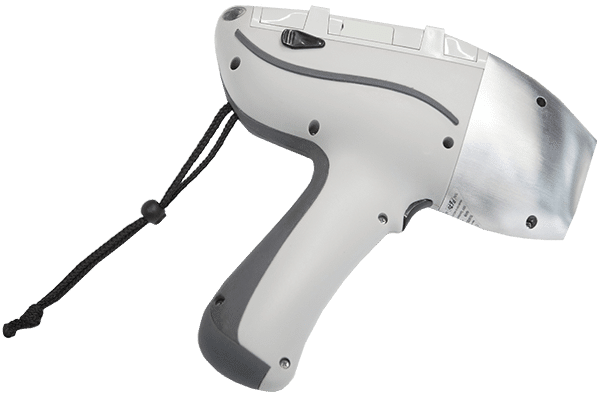
Elvatech handheld XRF analyzers: ProSpector 3 and ProSpector 2 for PMI.
Distributed in Italy by DIPITECH, these two handheld XRF analyzers for Positive Material Identification verify the chemical composition and alloy grade of metals in seconds without damaging the part. The ProSpector 3 has an SDD detector, identifies the grade automatically, weighs 1.05 kg with battery and runs for up to 16 hours.
Manufacturer: ElvatechElvatech Ltd — represented and distributed in Italy by DIPITECH Industrial Solution
Elvatech handheld XRF analyzers are built for Positive Material Identification (PMI) and used in oil & gas, petrochemical, power generation, aerospace, automotive, construction and metal fabrication. The choice between the two models depends mainly on which elements you need to measure and how much sensitivity and runtime you need. We help you decide based on the materials you actually inspect, with technical and commercial support in Italy.
ProSpector 3 • Latest generation
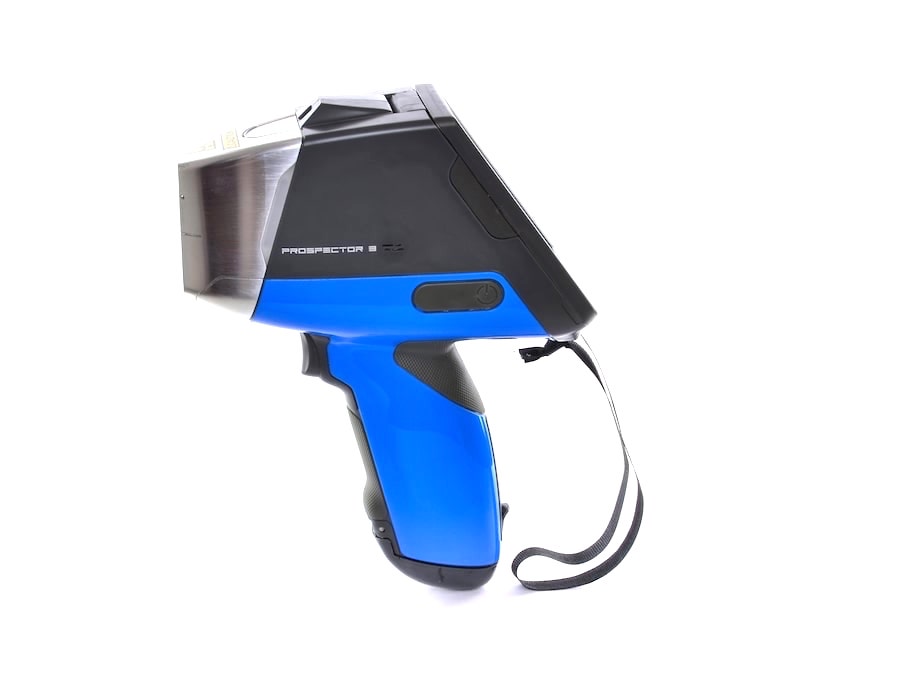
Elvatech ProSpector 3 — handheld XRF with SDD detector
The latest-generation model uses a high-performance SDD detector with low detection limits and identifies the alloy non-destructively in seconds. An extended library recognizes the grade automatically, and several application calibrations can be loaded on the same instrument. Teams that switch between incoming inspection, production control and asset integrity checks can do it all with one analyzer.
Max range: Mg (Z12) → U (Z92), or from Na (Z11) with optional helium purge
Identification: automatic grade ID with extended library
Weight: 1.05 kg with battery
Runtime: up to 16 h with hot-swap battery
Optional connectivity: Wi-Fi, Bluetooth, GPS and MicroSD card
Aiming camera available as an option
Multiple application calibrations on the same instrument
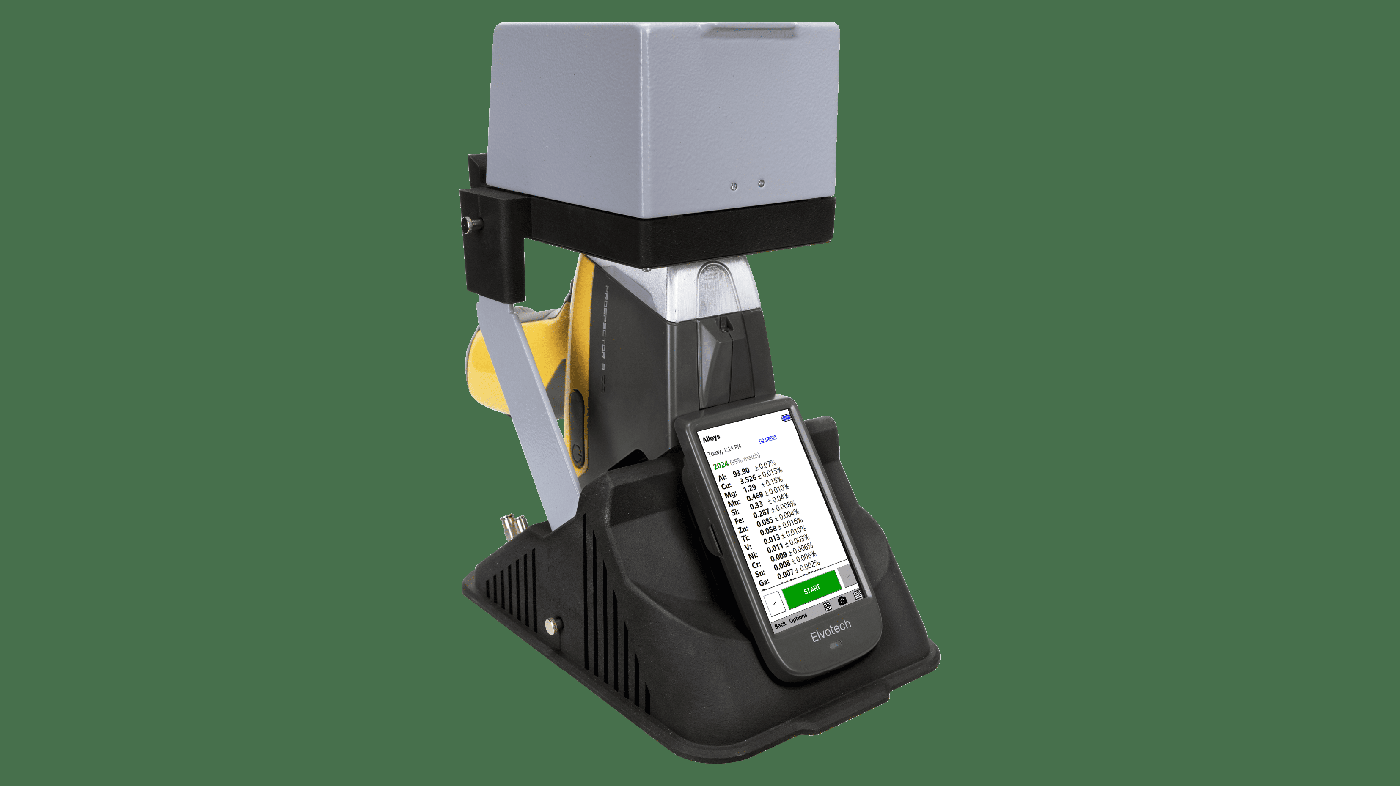
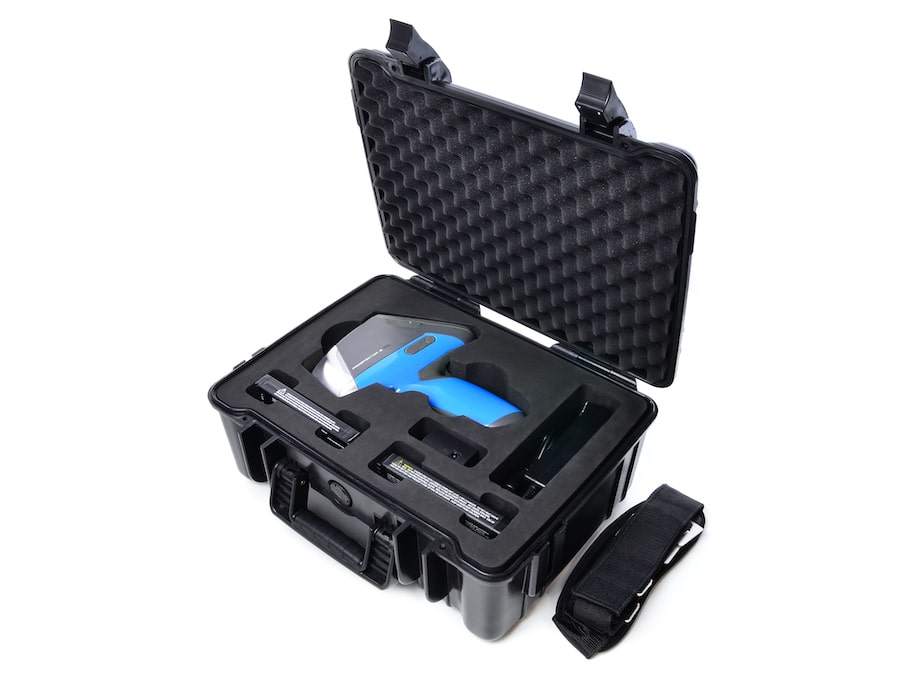
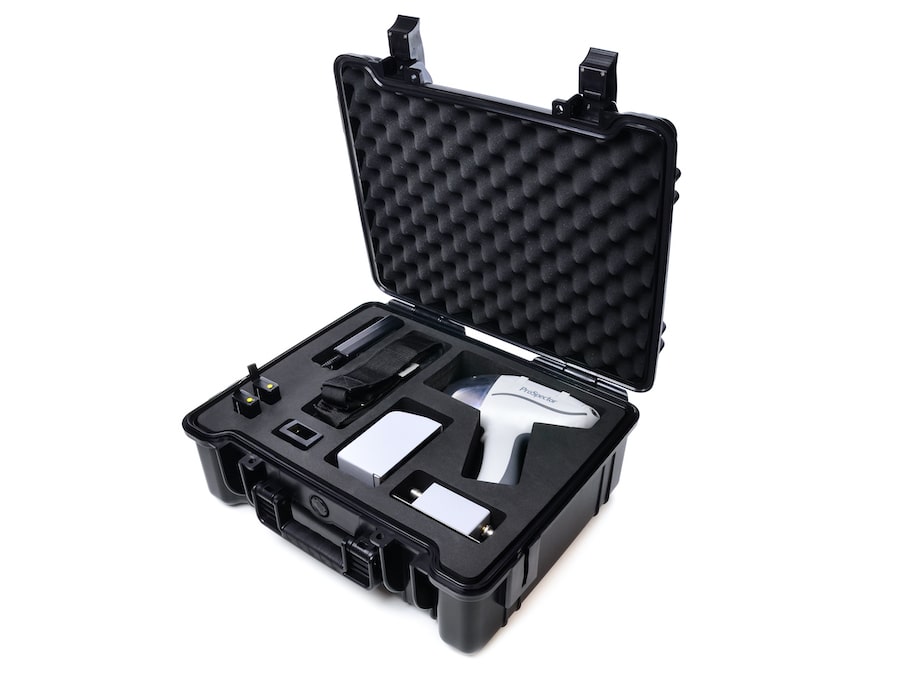
ProSpector 3 on a bench stand with results on screenKit in hard case with accessories
Of the three configurations, Basic covers sulfur to uranium, Advanced starts from magnesium and Max adds sodium with the optional helium purge.
ProSpector 2 • Established solution
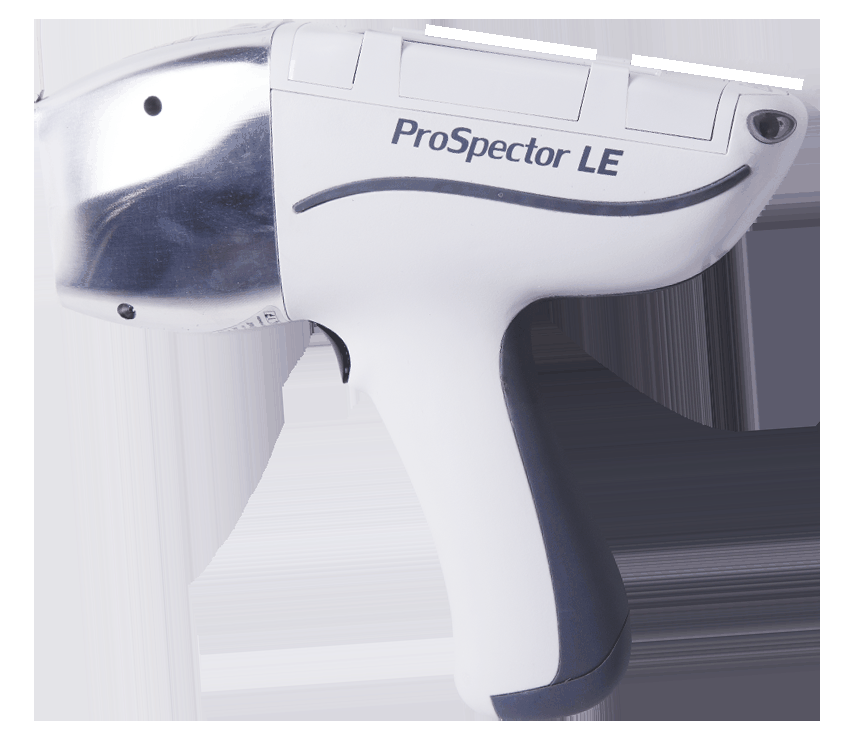
Elvatech ProSpector 2 — handheld XRF for routine PMI
For everyday PMI there is the ProSpector 2, the established model in the range, rugged and easy to use. It quickly identifies the most common materials at receiving and on the shop floor, and the LE version extends measurement to light elements such as magnesium and aluminum.
Application: routine PMI, fast identification of the alloy
Standard range: Cl (Z17) → U (Z92)
LE range: Mg (Z12) → U (Z92), for light elements
Rugged build, simple to operate
Materials: stainless and tool steels, nickel, titanium, copper and cobalt alloys; aluminum alloys with the LE version
Use: incoming inspection, production, maintenance
ProSpector 2: side view of the unitKit in hard case with accessories
The standard version covers chlorine to uranium, while the LE starts from magnesium.
Identified materials
Metals and alloys Elvatech XRF analyzers recognize.
From quality control and supplier verification to material traceability, Elvatech analyzers cover the metal families most widely used in industry.
Steels
Stainless steels of the 200/300/400 series, carbon and low-alloy steels, tool steels (HSS).
Nickel and cobalt alloys
Nickel, superalloys and cobalt, with grade identification on critical components that run at high temperature.
Titanium and aluminum
Titanium, aluminum and magnesium, the last two with the light-element configurations (ProSpector 3 Advanced or Max, ProSpector 2 LE).
Copper, brass and bronze
Copper, brass, bronze and zinc, checked in foundries, in metal fabrication and in scrap sorting.
Refractory alloys
Materials based on tungsten (W), molybdenum (Mo), tantalum (Ta) and niobium (Nb).
Filler metals and ferroalloys
Welding filler metals and ferroalloys, to be checked before they go into production.
XRF determines the elemental composition of the material but does not measure carbon (C). The fluorescence X-rays of such a light element have too little energy and are absorbed by the air and the detector window before they can be measured. That is why grades that differ only in carbon content, such as 304 and 304L or 316 and 316L, cannot be reliably told apart with XRF alone. These cases call for a technique that measures carbon: spark OES or, in the field, the LANScientific 830C handheld LIBS, which DIPITECH also distributes. Tell us which check you need to run and we will point you to the right method.
The table compares element range, weight, runtime and typical use of each model. Price depends on the configuration, so you will find it in the quote we prepare for your PMI application.
Model
Element range
Weight / runtime
Notes
ProSpector 3 Basic
S (Z16) → U (Z92)
1.05 kg / up to 16 h
SDD detector, PMI and alloy identification
ProSpector 3 Advanced
Mg (Z12) → U (Z92)
1.05 kg / up to 16 h
Light-element coverage, SDD
ProSpector 3 Max
Mg (Z12) → U (Z92); Na (Z11) with He purge
1.05 kg / up to 16 h
Maximum element coverage, optional helium purge
ProSpector 2
Cl (Z17) → U (Z92)
1.4 kg
Rugged and simple, fast alloy identification
ProSpector 2 LE
Mg (Z12) → U (Z92)
Handheld, light elements
Extends coverage to light alloys
Element range, calibrations, accessories and connectivity are defined based on the materials you inspect, the elements you care about and the goal of the inspection. Official documentation is on elvatech.com and the YouTube @Elvatech channel.
FAQ
Frequently asked questions about Elvatech XRF analyzers
What is the difference between ProSpector 3 and ProSpector 2?
The ProSpector 3 is the latest-generation model. It has a high-performance SDD detector with low detection limits, weighs 1.05 kg with battery and runs for up to 16 hours with the hot-swap battery. Depending on the configuration, it covers sulfur (Z16) or magnesium (Z12) through uranium (Z92). The ProSpector 2 is designed for routine PMI and covers chlorine (Z17) through uranium, or magnesium through uranium in the LE version.
Which materials do Elvatech XRF analyzers identify?
They identify stainless steels (200, 300 and 400 series), carbon and low-alloy steels, tool steels (HSS), nickel, titanium, cobalt, aluminum, magnesium, copper (brass and bronze) and zinc alloys, plus superalloys, refractory alloys (W, Mo, Ta, Nb), filler metals and ferroalloys. Aluminum and magnesium require a light-element configuration.
Does XRF measure carbon?
No. XRF measures elemental composition but not carbon, so it cannot reliably distinguish grades that differ only in carbon content, such as 304 and 304L or 316 and 316L. These checks require spark OES or the LIBS 830C.
Is Elvatech XRF analysis non-destructive?
Yes. The measurement verifies chemical composition and alloy grade in seconds without altering the component or taking samples, so it is used for incoming inspection, on finished parts and on equipment in service.
How do I request a quote for an Elvatech XRF analyzer?
Tell us the materials and alloys to check, the elements of interest, the goal (grade identification or quantitative analysis), the working environment and the expected number of tests. We guide your choice between ProSpector 3 and ProSpector 2 and reply within 24 hours. You can use the form below, WhatsApp or email.
Application support
Help with selection and first use.
We support you from choosing the configuration through the first measurements with the instrument.
Configuration
Choice between ProSpector 3 and ProSpector 2 and of the configuration that fits the alloys and elements you need to measure.
First use
Hands-on support during the first measurements and while fitting the instrument into your material inspection procedure.
Training and safety
Operator training, the manufacturer’s guidance for working safely with the X-ray tube and direct contact with Elvatech for service and spare parts.
Contact
Let’s find the right XRF analyzer for your materials.
If you need to buy or evaluate a handheld XRF analyzer for PMI, DIPITECH Industrial Solution, the Elvatech distributor in Italy, helps you clarify the requirement, choose between ProSpector 3 and ProSpector 2 and reach the right configuration.
Application request
Tell us what you need to analyze.
Include the materials and alloys to check, the elements you care about, the goal of the inspection and the working environment.
Newsletter
Subscribe for industrial technology updates.
Updates on non-destructive testing, material analysis, industrial automation and robotics.