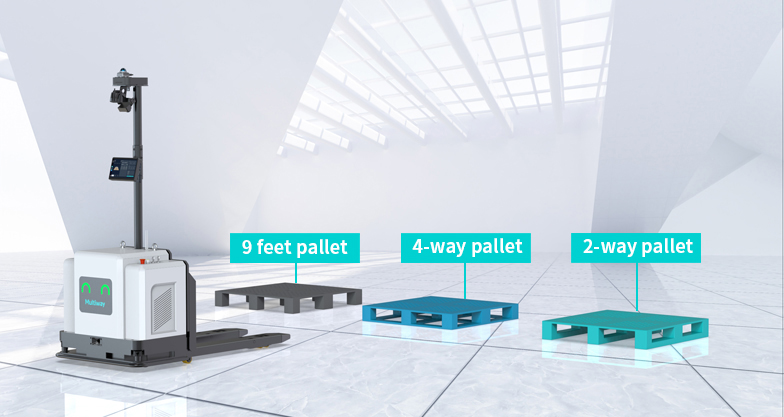
Multiway AMR and autonomous forklifts for intralogistics.
Robotic forklifts and AMRs distributed in Italy by DIPITECH to move pallets and loads in warehouses and production without an operator. Pallet trucks, stackers, reach and counterbalanced trucks and VNA units, with SLAM/laser navigation, fleet management and software integration.
Autonomous robotic forklifts for the warehouse and the production floor.
Manufacturer: Multiway RoboticsMultiway Robotics (Shenzhen) — represented and distributed in Italy by DIPITECH Industrial Solution
Multiway Robotics manufactures autonomous AMRs and robotic forklifts for intralogistics and reports over 700 industrial customers in more than 20 sectors, including automotive, food, pharma, new energy, cold chain and manufacturing. The vehicles navigate with SLAM/laser and move pallets and loads on their own, coordinated by a fleet management system. DIPITECH works with you on the feasibility study, the ROI estimate and the fleet configuration, with technical-commercial support in Italy.
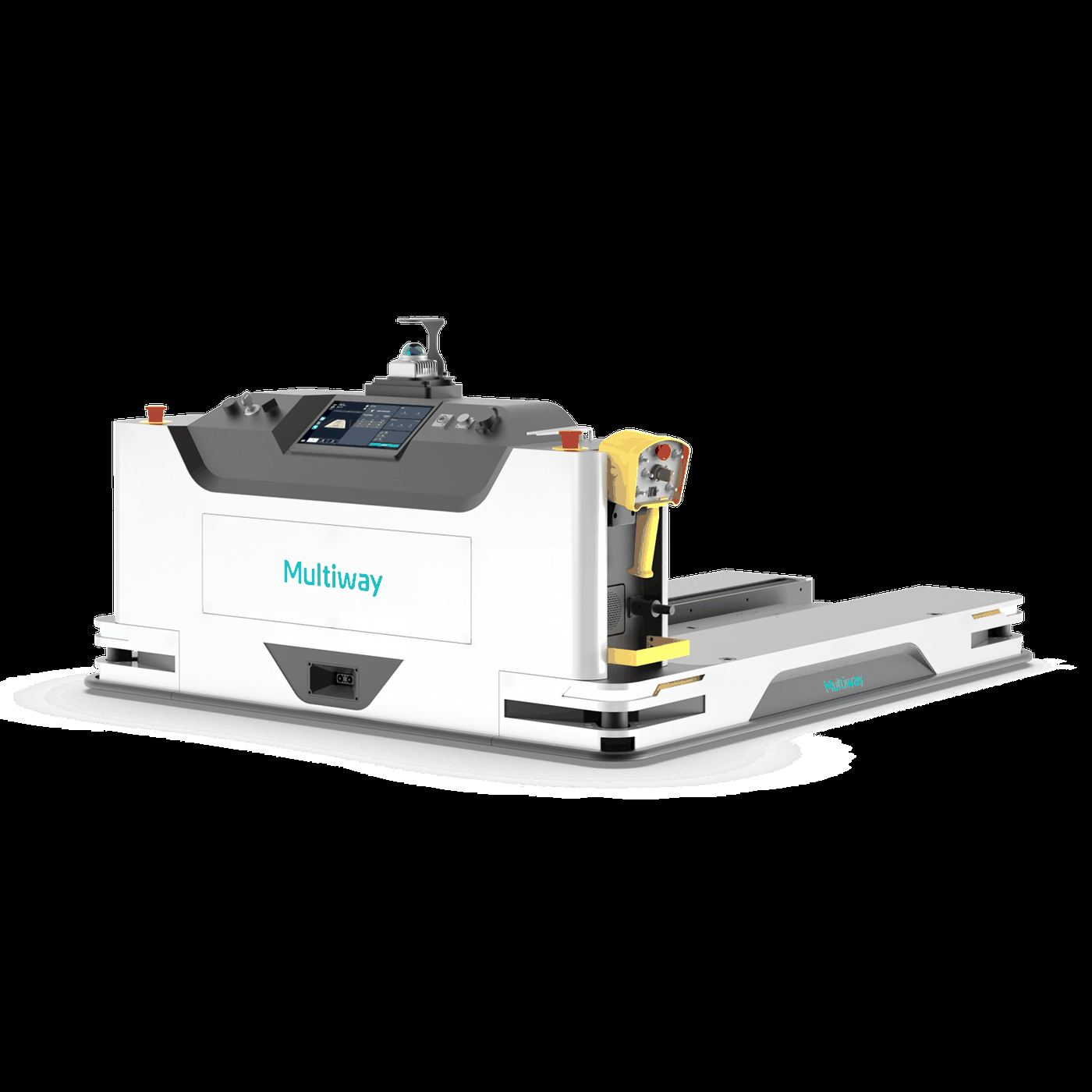
OT15 • Omnidirectional forklift
Multiway OT15 — omnidirectional AMR forklift
The OT15 is an omnidirectional autonomous forklift. It moves in any direction, sideways included, so it maneuvers in tight spaces and handles loads even in congested areas, with a capacity of 1,500 kg.
Type: omnidirectional robotic forklift (AMR forklift) for warehouse and production
Capacity: 1,500 kg
OT15 lift height: 360 mm
Movement: any direction, sideways included, for tight aisles and spaces
Navigation: SLAM/laser (natural), based on the existing environment
Safety: scanners and sensors that detect obstacles and people
Autonomous pallet handling in intralogisticsRobotic forklift in a production environment
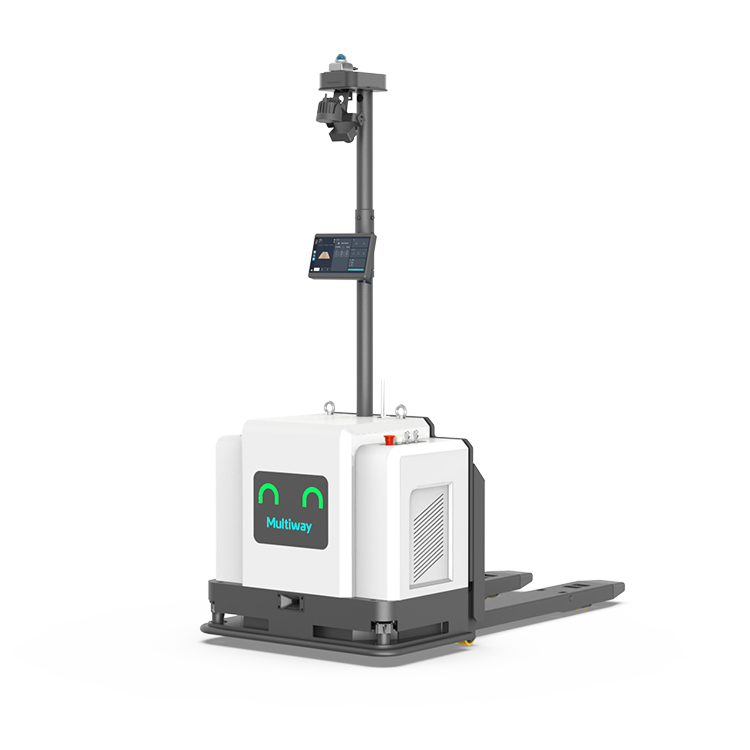
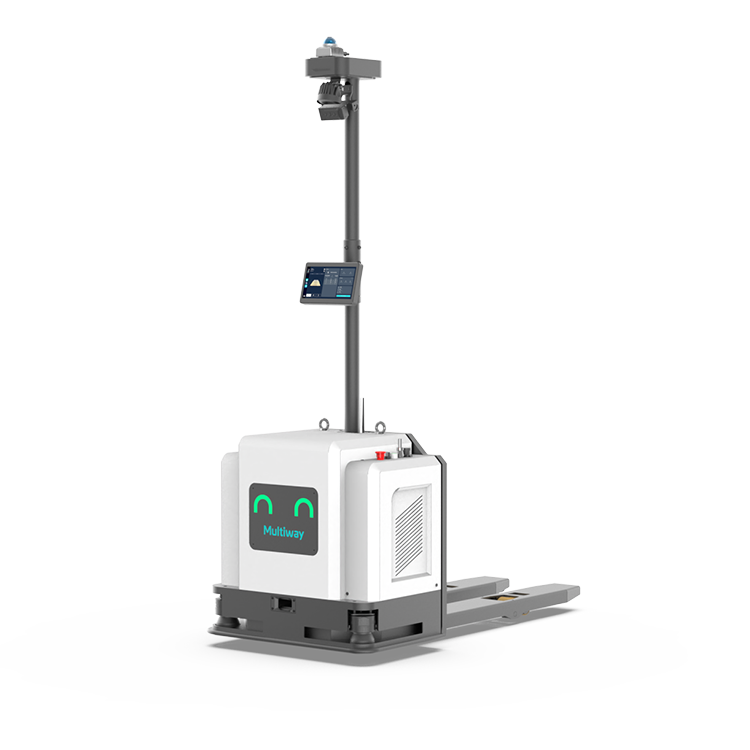
X20 / X20S • Autonomous pallet truck
Multiway X20 and X20S — autonomous pallet trucks
The X20 and X20S are robotic pallet trucks that move pallets on their own in warehouses and production. With a 2,000 kg capacity they mainly serve point-to-point transport and line feeding, and they work in the same fleet as the other vehicles.
Type: autonomous pallet truck for horizontal load transport
Capacity: 2,000 kg
X20 lift height: 205 ±5 mm
Use: point-to-point transport and feeding of production lines
Navigation: SLAM/laser (natural), with no floor guidance
Integration: fleet management, WMS and WCS
Autonomous pallet truck for intralogistics
AMR range
All Multiway robotic forklift types.
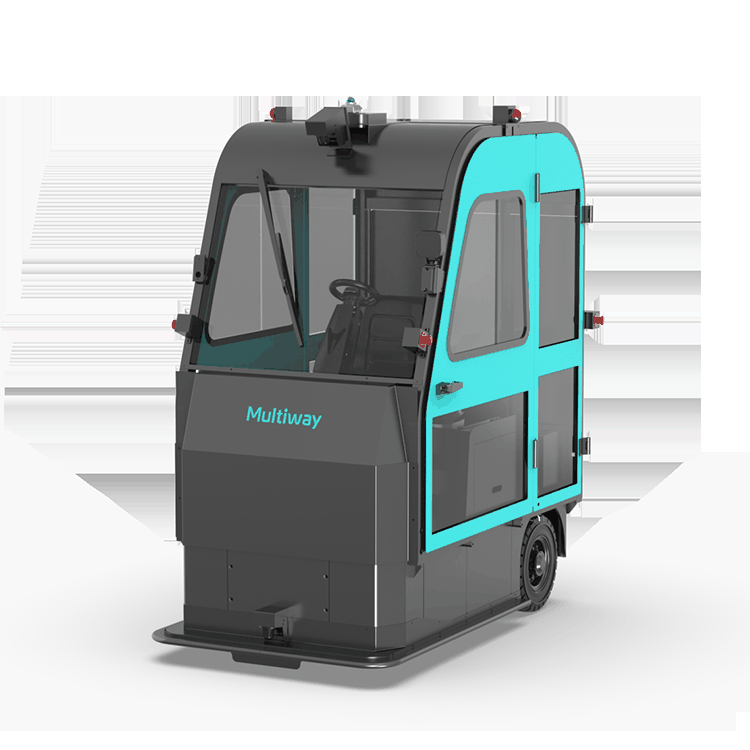
Beyond pallet trucks and omnidirectional forklifts, the Multiway range includes autonomous stackers, reach trucks, counterbalanced forklifts and VNA units. The vehicle is chosen based on storage height, aisle width and pickup point.
Autonomous pallet trucks
Robotic pallet trucks (X20/X20S) up to 2,000 kg, for floor-level transfers between docks, storage and lines.
Autonomous stackers
Autonomous stackers that lift and set down loads on several racking levels.
Autonomous reach trucks
Robotic reach trucks for deep racking and high storage in dense warehouses.
Autonomous counterbalanced trucks
Counterbalanced autonomous forklifts for floor-level loads, docks and flexible handling.
VNA for narrow aisles
The MW-K15 VNA lifts up to 9 m in an aisle of just 1.75 m, to increase storage density.
Software and fleet management
WMS, WCS and fleet management with VDA 5050 interoperability to coordinate multiple vehicles and mixed fleets.
Multiway AMRs use SLAM/laser navigation. They map the environment, compute the path on their own and recompute it when they meet an obstacle, with no invasive fixed infrastructure. Functional safety relies on scanners and sensors with protective and slow-down fields near people and vehicles, and the reference standard for driverless industrial trucks is ISO 3691-4. Fleet management assigns missions and regulates traffic, charging and priorities, while integration with WMS/WCS and VDA 5050 interoperability connect the AMRs to the IT system and to mixed fleets. We define layout, flows and safety requirements with you in the feasibility study.
The table sums up type, capacity and use of the main models. Price depends on the model, the number of vehicles and the integration, so DIPITECH prepares it on your intralogistics project.
Model
Type
Capacity / lift
Notes
OT15
Omnidirectional forklift
1,500 kg / 360 mm
Omnidirectional, tight spaces
X20
Autonomous pallet truck
2,000 kg / 205 ±5 mm
Point-to-point pallet transport
X20S
Autonomous pallet truck
2,000 kg
Line feeding, intralogistics
MW-K15
VNA narrow aisle
Lift up to 9 m
1.75 m aisle, high storage density
The right configuration (vehicle type, capacity, heights, fleet and integration) is defined on your real flows, loads and layout. Official documentation is on the manufacturer’s site, mw-r.com.
FAQ
Frequently asked questions about Multiway AMR and robotic forklifts
What is the difference between an AMR and a traditional AGV?
Multiway AMRs navigate with SLAM/laser (natural navigation). They recognize the environment, choose their own path and steer around obstacles, without the magnetic tape or fixed reflectors used by many traditional AGVs. That makes them more flexible and quicker to reconfigure when the layout changes.
Which types of robotic forklifts does Multiway offer?
The range includes autonomous pallet trucks (X20/X20S, 2,000 kg), omnidirectional forklifts (OT15, 1,500 kg), stackers, reach trucks, counterbalanced forklifts, VNA units for narrow aisles (MW-K15, lift up to 9 m with a 1.75 m aisle) and sideloaders. It therefore covers both floor-level transfers and high-bay storage.
Do I need to modify the warehouse to install them?
Usually no invasive work is needed, because SLAM/laser navigation uses the existing environment. The site survey still checks floor flatness, aisle width with the vehicle loaded, Wi-Fi coverage and charging points. The project then defines areas, pick and drop points, safety and the interfaces with WMS/WCS, doors and elevators. DIPITECH supports you in this analysis and in the project.
Do Multiway AMRs integrate with multiple units and the software system?
Yes, fleet management coordinates multiple vehicles and handles traffic, charging and priorities. WMS/WCS integration and VDA 5050 interoperability let the AMRs talk to the IT system and to mixed fleets, including other brands.
How do I request an evaluation for a Multiway AMR project?
Send us the flows and volumes to automate, the load and pallet type, heights and aisles, layout and shifts. With this data DIPITECH, which distributes Multiway in Italy, sets up the evaluation and tells you which vehicle types you need and how many. Use the form below, WhatsApp or email.
Application support
Feasibility, ROI and commissioning.
Once the vehicle is chosen, we help you define the intralogistics project and coordinate the next steps with Multiway, from commissioning to service.
Flow study and ROI
Analysis of flows, volumes and shifts, choice of AMR type and return-on-investment estimation.
Fleet configuration and integration
Fleet sizing, WMS/WCS integration and definition of safety interfaces.
Start-up and service
Coordination of commissioning, trials and connection with Multiway for service and spare parts.
Contact
Request an evaluation or a quote for a Multiway AMR project.
If you want to automate internal material handling with robotic forklifts, DIPITECH Industrial Solution, the Multiway distributor in Italy, helps you evaluate feasibility and ROI and turn the project into an operating fleet.
Application request
Tell us about the intralogistics project.
Start from the basic data, meaning what moves, how much it weighs, how high it is stored and over how many shifts.
Newsletter
Subscribe for industrial technology updates.
Updates on non-destructive testing, material analysis, industrial automation and robotics.