Automation • Robotics • Software • AMR/AGV

Industrial material handling automation: AMR, AGV, autonomous forklifts and robotic handling solutions.

For pallets, parts and materials: AMR/AGV, autonomous forklifts, mobile manipulators and goods-to-person automated storage, alongside robotics and custom software for production flows and NDT workflows.

Reply within 24 hours · Solution matched to your flow · Technical support in Italy

Quick answer

What is automated material handling?

Automated material handling uses vehicles and robotic systems to move pallets, parts and materials between production, storage and shipping. It covers AGVs on fixed paths, AMRs that navigate with sensors and maps, autonomous forklifts and goods-to-person automated storage. It suits repetitive, measurable flows, and projects often start with a single vehicle.

We help you choose the right material handling solution: quote within 24 hours

How much does an automated warehouse or an AMR fleet cost?

It depends on how many moves you make per shift, the loads, the layout and the systems to connect, which is why a quote starts from a first assessment of your flow. Send us your floor plan and handling figures and we’ll get back to you within 24 hours with the solution worth exploring.

  • Reply within 24 hours
  • Pallets, totes, mobile shelving and heavy loads
  • Custom solutions for your flow
  • Feasibility study on your layout
Industrial Automation and Software

Robotic solutions, material handling and digital workflows.

Automated material handling, robotics applied to inspection and custom software often end up in the same project, because they share the layout, the data and the production, quality and non-destructive testing systems. When standard products are not enough, we develop custom solutions with the manufacturers around each customer’s application, from handling tooling to integration with lines and software.

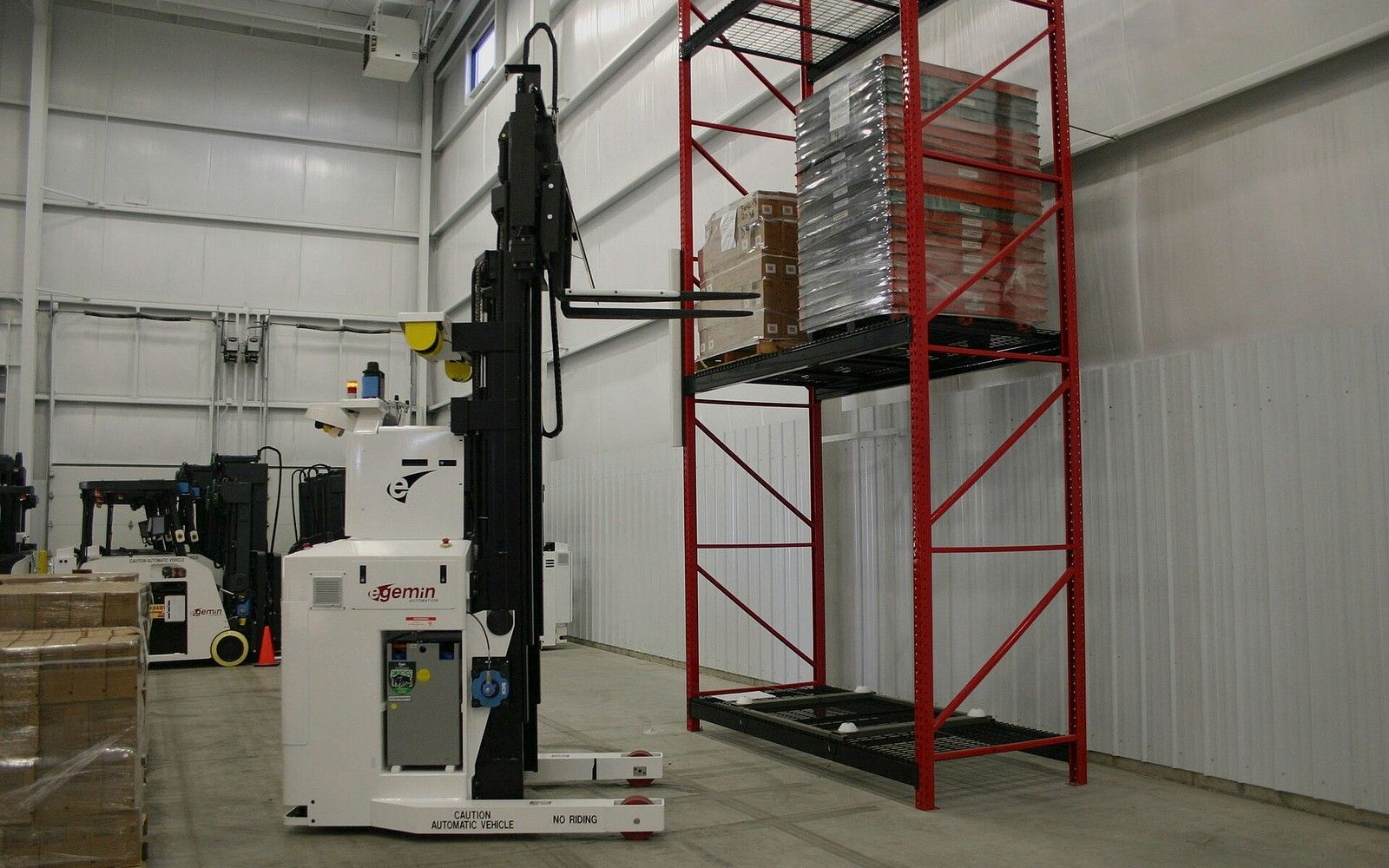
robotic forklift and automated material handling in factory
Industrial Automation

Robotics, AMR/AGV, robotic forklifts and material handling

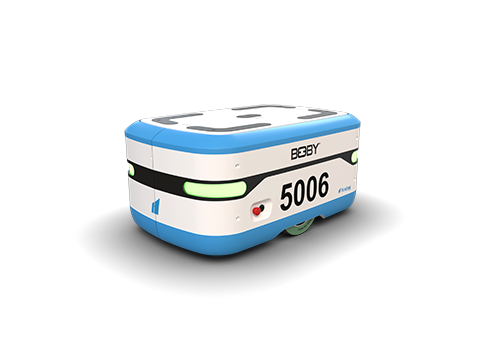
AMRs, AGVs and autonomous forklifts move materials, pallets, components and semi-finished parts between lines, warehouses, production cells and logistics areas. They take repetitive transport off your operators and log every mission in the control system, which helps both productivity and traceability.

  • AMR/AGV and robotic forklifts for intralogistics and material handling.
  • Industrial robotics and cells for handling, loading/unloading and production support.
  • Evaluation of flows, layout, payload, safety, software integration and ROI.
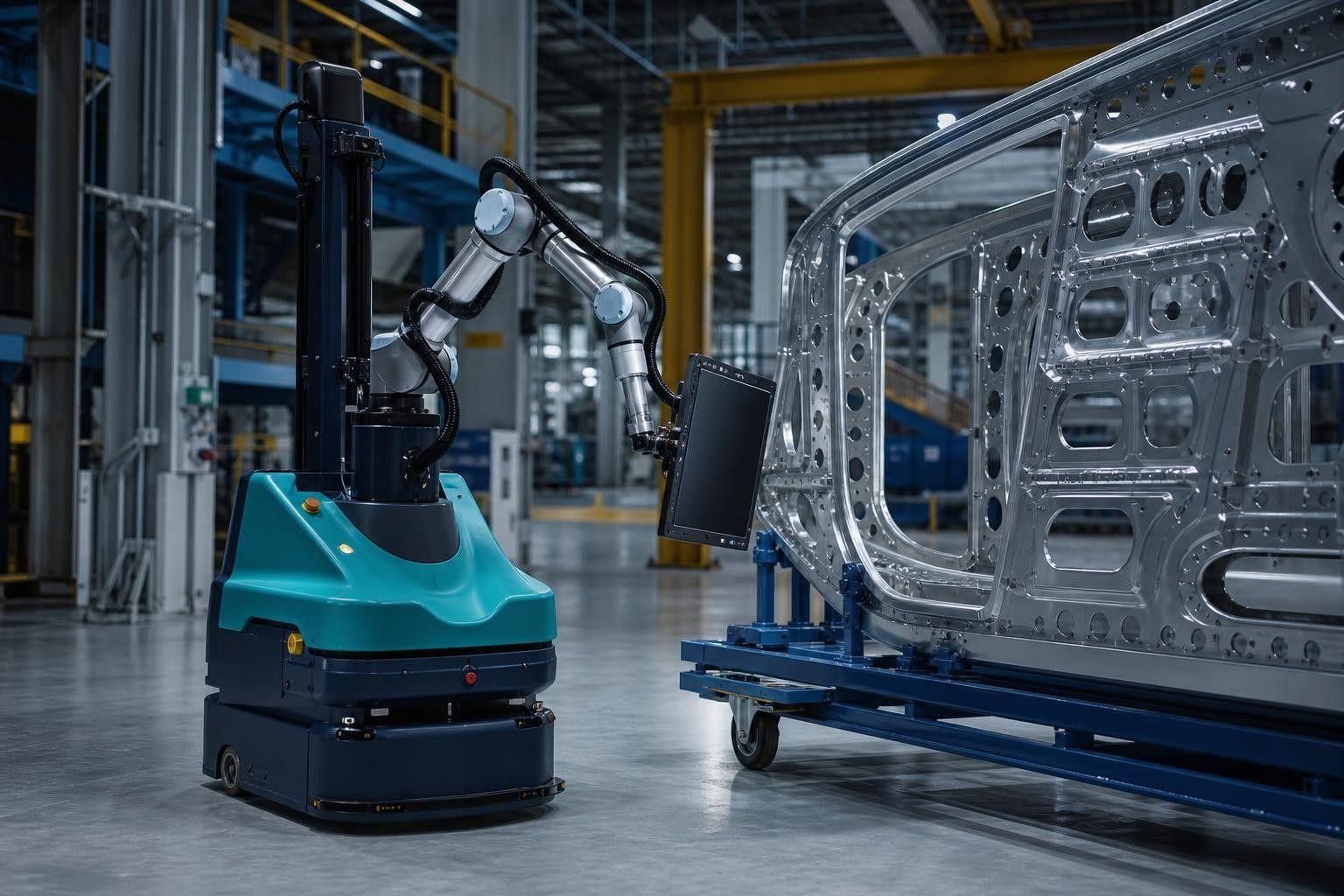
autonomous cart with robotic arm and DR detector for automated NDT
Robotics applied to NDT

Automation of NDT methods and repetitive inspections

Robots, autonomous carts and positioning systems can support repetitive radiographic, visual or dimensional inspections, improving repeatability, operator safety and process traceability.

  • Automated movement of detectors, sensors or inspection equipment.
  • Support for DR workflows, visual inspection, measurements and production checks.
  • Evaluation of safety, layout, shielding, accessibility and data integration.
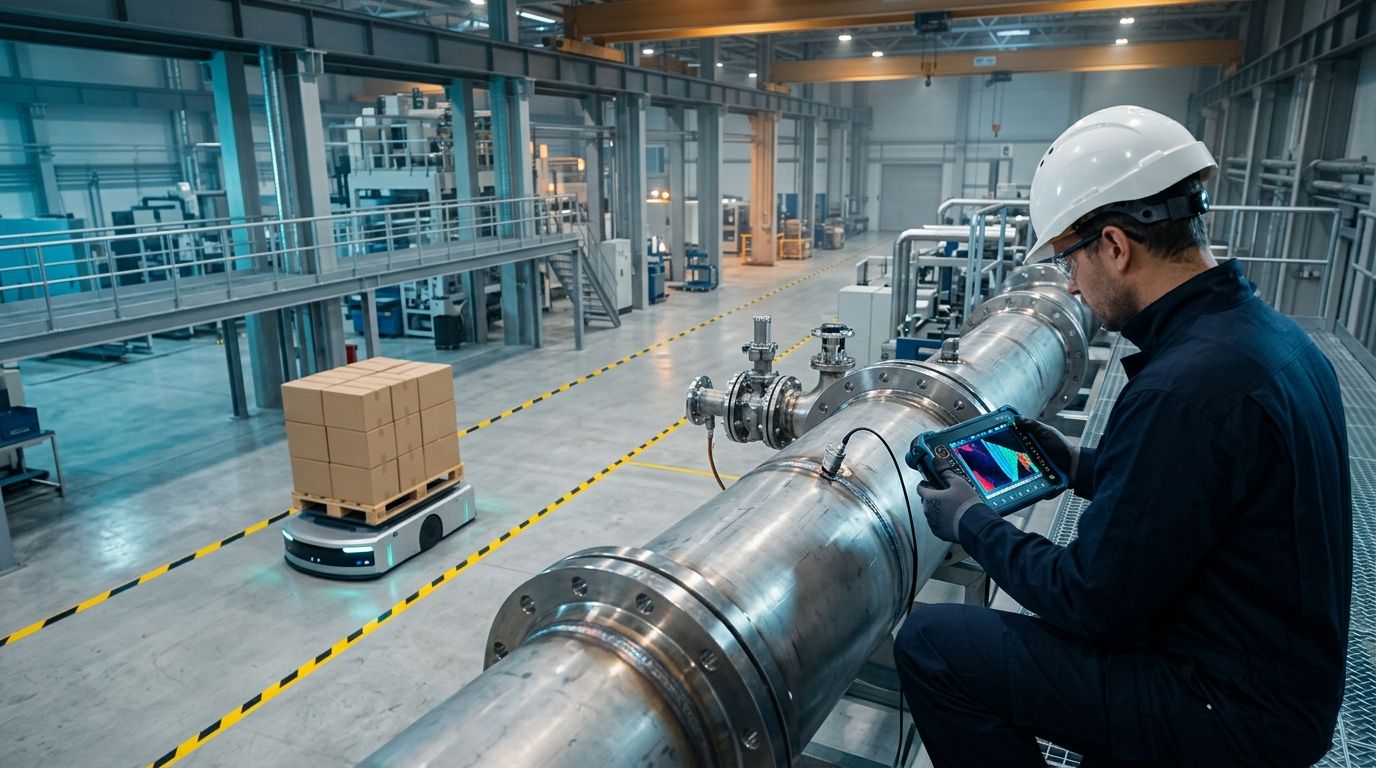
digital workflows and industrial software: technician with digital instrument and AMR robot in a facility
Industrial software

Custom software for industrial and NDT workflows

Tailored software solutions to digitalize data collection, reporting, traceability, image management, quality-system integration and operational flows between production, laboratory and quality control.

  • Dashboards and reports for quality, maintenance and production.
  • Integration with NDT instruments, databases, MES, ERP or document systems.
  • Digital workflows to reduce manual activities, errors and data fragmentation.
Our products

The products we distribute

For material handling, DIPITECH represents autonomous forklifts and AMRs, a goods-to-person automated warehouse and motorized skates for heavy loads.

Choosing the solution

Which handling solution for which flow.

Describe the flow before you pick the vehicle: what moves, how many times an hour, over what floor and with how many people around. With those answers the choice nearly always narrows to one or two technologies. The conveyor stays in the table as a benchmark, because on a fixed, high-volume stretch it is often still the simplest answer.

Comparison of automated material handling solutions
SolutionLoad typeFlowInfrastructureLayout flexibilityWhen to choose it
AMR (autonomous mobile robot)Totes, carts, roll cages and componentsVariable missions between departments, line feedingNo floor guidance: map, Wi-Fi and chargingHigh, routes change in softwareExisting plant, mixed traffic, flows that change
AGV (automated guided vehicle)Carts and pallets, including heavy or oversized loadsFixed A-to-B routes with synchronized cycle timesMagnetic tape, tags, laser reflectors or wire guidanceLow, every change reopens the job siteA flow that stays the same for years, or a line at fixed takt
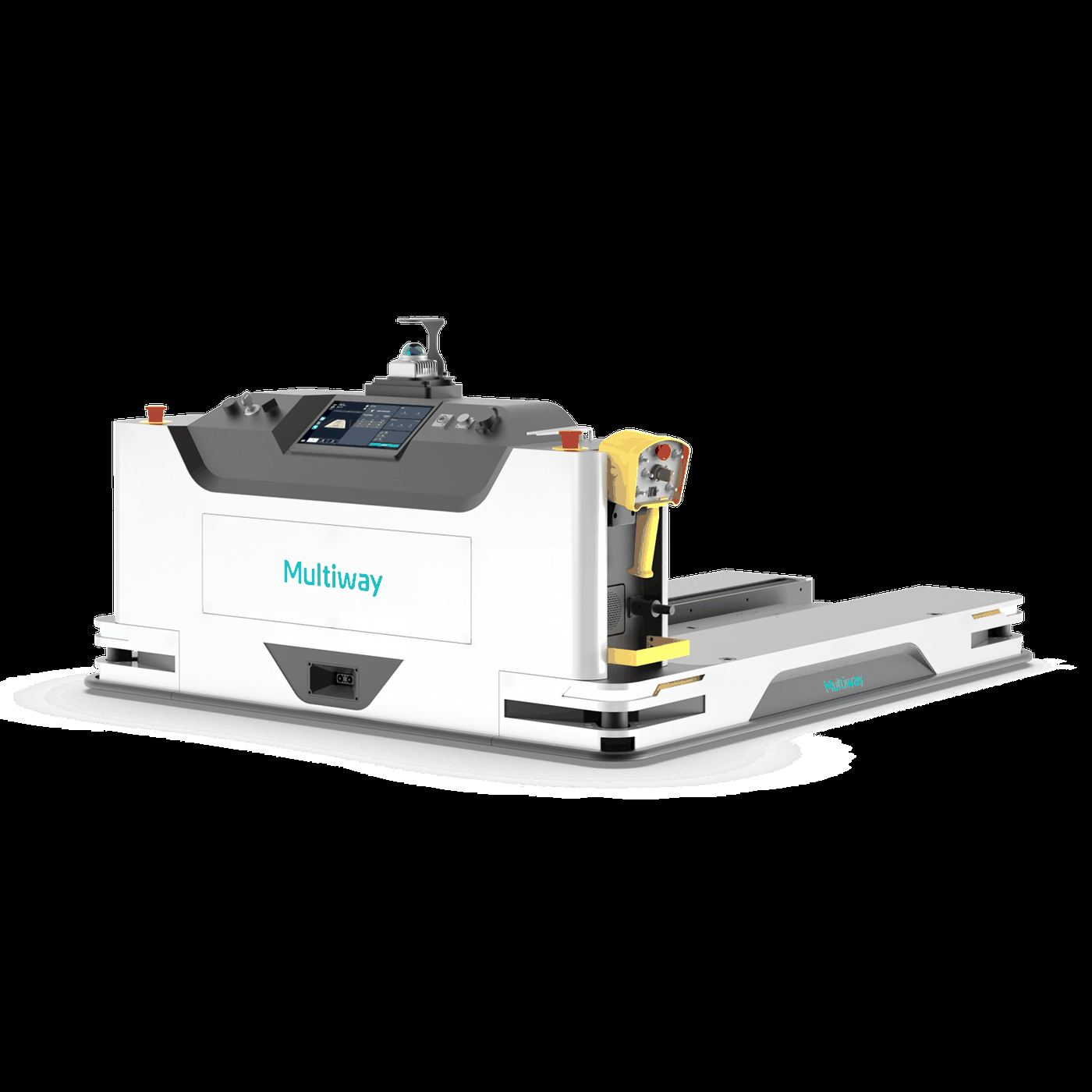
Autonomous forklift (robotic forklift)Pallets and unit loads, on the floor or in rackingEnd of line, loading docks, high-bay storageLaser/SLAM navigation, flat floor, aisles sized for the loaded truckMedium to high, within aisle and height limitsMany pallet missions across several shifts: see the Multiway autonomous forklifts
Mobile manipulator (AMR with a robot arm)Parts and bins, roughly under 30 kgPicking and placing between benches, machines and cellsReference stations and an interface with machine doors and controlsHigh, tied to station calibrationMore machines to tend than operators available
Goods-to-person automated warehouseSmall and medium SKUs on mobile shelvingOrder-line picking, production kits, spare partsPicking stations and a WMS link, with no heavy civil worksMedium, it grows by adding robots and shelvesMany order lines a day and pickers who walk more than they pick: see the Scallog goods-to-person system
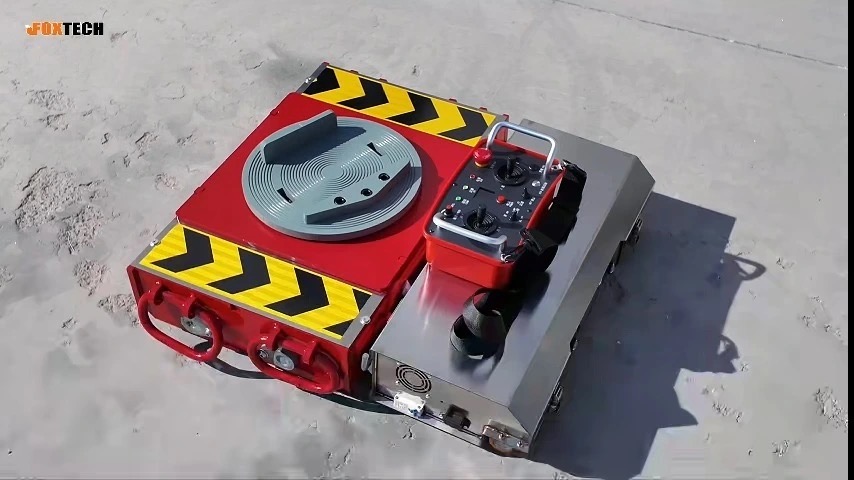
Motorized skates for heavy loadsMachinery, presses and dies from 20 to 60 tOne-off moves driven by an operator with a remote controlNone, the floor just needs enough load capacityFull, they go wherever the load isLayout changes and maintenance without a crane: see the FOXTECH motorized skates
Conveyor (benchmark)Cases, totes and regular-shaped partsHigh, continuous throughput between two fixed pointsFixed floor or overhead installation that takes up the passageMinimal, moving it means rebuilding itA stretch that won’t change; a poor fit if it crosses aisles used by people and trucks

Our technical articles cover the real differences between AGVs and AMRs, how to automate pallet handling with AMRs in a running warehouse, when a mobile manipulator with a robot arm makes sense, how to choose an automated warehouse and when goods-to-person pays off, how to calculate AMR ROI, TCO and payback, the effect of AMRs on safety and injuries and sizing the charging stations.

Feasibility study

Where to start: the feasibility study.

A feasibility study lets you decide before you buy, and nearly all the data it needs is already in-house. DIPITECH builds it on your numbers, before any quote.

The data you already have

The movement history from the WMS or ERP, over a period that includes the seasonal peak; the dimensioned floor plan with aisles, doors and slopes; load types, shifts and the systems to connect, meaning WMS, ERP or MES.

The site survey

It checks what the floor plan doesn’t show: floor flatness and joint condition, usable aisle width with the vehicle loaded, wireless coverage, charging points, crossings with manned trucks. It affects the quote more than any spec sheet does.

Flow simulation

The fleet is sized on the worst hour: missions needed at peak divided by the missions one vehicle completes in an hour, net of charging and waiting. With complex routes, the vehicle count is checked in simulation before the quote.

A pilot, or a reasoned no

If the numbers leave room for doubt, you start with a few vehicles on a representative flow and an exit condition written in advance. With low volumes, a single shift and routes that change every day, the study says so: reorganize the manual flows first.

Standards that shape the project

The specification should state the safety references and who signs the conformity of the whole when vehicles and software come from different suppliers.

  • ISO 3691-4:2023 for driverless industrial trucks and their systems, including AGVs, AMRs and autonomous forklifts (remotely controlled trucks are excluded).
  • ISO 12100:2010 for risk assessment and risk reduction.
  • ISO 10218-2:2025 for robot applications, when an arm rides on the vehicle.
  • Regulation (EU) 2023/1230, applicable from January 20, 2027, in place of Directive 2006/42/EC, with requirements for autonomous mobile machinery.
  • VDA 5050 for communication between master control and vehicles, including mixed brands.
  • VDI 2710, 2025-06 edition for the design of automated guided vehicle systems.

What data to prepare and what the study has to prove is covered in our guide to evaluating an autonomous forklift and AMR project.

Which handling solution does your plant need?

Tell us your loads, routes and shifts and we will point you to the right material handling solution, with a reply within 24 hours.

  • Reply within 24 hours
  • AMR, AGV, autonomous forklifts and goods-to-person
  • Technical support in Italy
Applications

Where it is used, in the factory and the warehouse.

Part handling in factoriesLine feedingInternal transportShop-floor logisticsReduced manual handlingProduction continuityProduction warehousePallet handling
DIPITECH approach

Process first, technology second.

We start from your plant layout, the loads and their dimensions, the material flows, the interfaces with lines and machines, safety and software integration.

What to send us for an evaluation

  • Floor plan with routes, aisles and doors.
  • Loads, dimensions and number of moves per shift.
  • Pickup and drop-off points for materials.
  • Lines, machines and systems to connect (WMS, MES).
  • Shifts, safety constraints and the financial target.
Technical criteria

How to choose AMR, AGV and robotic forklifts.

Handling automation is designed around the real flow, because loads, routes and environment decide the vehicle type, navigation and integration. These are the parameters we evaluate with you.

AMR, AGV or robotic forklift

The table above compares the technologies, but in practice the load makes the first call. Totes, carts and roll cages usually go on AMRs, pallets to stack or store at height on autonomous forklifts, and fixed routes at a steady takt on AGVs.

Payload and load type

Weight, dimensions and pickup method (pallet, bins, roll cage, components) set the vehicle capacity and the load-handling attachment. That is why payload is sized first, on the heaviest and bulkiest load rather than the average.

Navigation and environment

With laser/SLAM navigation, the deciding factors are narrow aisles, people on the floor, floor condition and route width. This data, checked during the site survey, tells you whether the installation is feasible and safe.

Safety and compliance

Safety scanners with protective and slow-down fields, risk assessment and CE marking are part of the project from the first layout draft. The scanner fields are configured around the speeds and routes set for each zone, with reduced speeds where vehicles cross paths with operators.

Integration and fleet management

Interfaces with lines, elevators, doors and WMS/MES, together with fleet management, decide how far automation really becomes part of the flow and how easily vehicles can be added over time.

ROI and continuity

Shifts, handled volumes, hours of manual handling saved and production continuity drive the business case. We help you estimate the return realistically, on your own numbers.

To move machinery and dies without a crane, DIPITECH represents the FOXTECH motorized transport skates for heavy loads (EST series, 20–60 t). The same projects often involve robotics applied to NDT inspections and software for quality workflows and traceability. If parts must be picked from benches and machines and moved between cells, see when a mobile manipulator, an AMR with a robot arm, is the right choice. For NDT, material analysis and visual inspection, go back to the technology overview.

FAQ

Frequently asked questions on automation and material handling

What is the difference between AGV and AMR?

AGVs follow fixed paths laid out with magnetic tape, tags or reflectors. AMRs (autonomous mobile robots) find their way with sensors and maps, recompute the route and avoid obstacles. That makes AMRs better suited to flows that change, while AGVs stay simpler on repetitive flows.

What is a robotic forklift?

It is an autonomous forklift that moves and stacks pallets with no operator on board. It receives its missions from the fleet manager, which is linked to the WMS, and works at the end of the line, at loading docks and in high-bay storage.

Is automation safe with people around?

Yes, if safety is part of the project from the start. The scanners slow down and stop the vehicle when a person enters the protective fields, and the risk assessment sets speeds and routes in areas shared with operators.

Does DIPITECH also integrate software?

Yes, together with the manufacturer and qualified partners. The work ranges from interfacing with lines and WMS/MES to fleet management and custom software for workflows and traceability, including non-destructive testing.

For an existing plant, AMR or AGV?

In existing buildings the AMR usually starts ahead, because it localizes on walls and racking with no tape or reflectors to install, shares space with people and manned trucks, and scales by adding vehicles. The AGV is still the right choice for routes fixed for years, cycle times synchronized with the line, or very heavy and oversized loads. The full comparison is in our guide AGV vs AMR.

How long does it take to implement an automated material handling project?

It depends on how much the project touches the building. For a standard goods-to-person system the manufacturer states two to three weeks of installation. For AMR and autonomous forklift fleets, the phased path we recommend runs data analysis (2-4 weeks), simulation where needed (2-6 weeks) and a pilot (8-12 weeks) before the rollout. AGVs with physical guidance take longer because of the floor work.

Which safety standards apply to AMRs, AGVs and autonomous forklifts?

The reference is ISO 3691-4:2023 on driverless industrial trucks, which covers AGVs, AMRs and autonomous forklifts; risk assessment follows ISO 12100. For CE marking, Directive 2006/42/EC applies today and Regulation (EU) 2023/1230 from January 20, 2027, with specific requirements for autonomous mobile machinery. With a robot arm on board, ISO 10218-2:2025 is added.

Can we start with a single vehicle?

Yes, and it is often the most prudent route. You assign one AMR or autonomous forklift to a repetitive, representative flow, with a measurable target set in advance, such as missions per hour at peak. Choose a fleet manager with an open interface such as VDA 5050 from day one, so vehicles can be added later. But if the flow needs more missions than one vehicle completes in an hour, a single-vehicle pilot validates the technology, not yet the project.

How do I request an evaluation?

Send us the layout, loads, routes, volumes and required integrations, ideally with the floor plan and the movement history. Based on that data, DIPITECH sets up the evaluation of the most suitable automation solution. Use the form below or WhatsApp.

Application support

Technical support, installation and training.

Once the technology is chosen, we help you define the project and coordinate installation, start-up and training with the manufacturer and qualified partners.

Solution configuration

Technical requirements, accessories, software, workflow and documentation needed for the application.

Start-up and installation

Coordination of commissioning, initial trials and integration into the industrial process.

Operator training

Initial training, application support and connection with the manufacturer for service and spare parts.

Contact

Let’s find the right handling solution for your plant.

If you need to automate the handling of pallets, totes or parts, or review a project already under way, DIPITECH Industrial Solution helps you clarify the requirement, compare AMRs, AGVs, autonomous forklifts and goods-to-person, and arrive at a concrete project.

Application request

Tell us about the flow to automate.

Include what moves, how many missions are needed at the peak hour, routes, shifts and the systems to connect.

WhatsApp