Industrial Radiography • X-ray • CR/DR

Industrial radiography equipment: X-ray systems, radioscopy, CR and DR.

We help you choose portable X-ray tubes and generators rated 160 to 320 kV, real-time radioscopy with DR detectors, CR and DR systems, processors, films, chemicals, radiographic accessories, reference samples and dosimetry.

Quote within 24 hours · System matched to your part · Technical support in Italy

Quick answer

What is industrial radiography?

Industrial radiography is a volumetric non-destructive test in which an X-ray or gamma-ray beam passes through the part and leaves an image of thickness and density differences on film, a CR plate or a DR detector. It is used to find porosity, inclusions, cracks and lack of fusion inside welds, castings and piping when the flaw does not show at the surface.

We help you choose the right radiography system: quote within 24 hours

How much does an industrial radiography system cost?

The price varies a lot between a portable generator with CR, a DR panel and a radioscopy cabinet, driven mainly by source energy, detector, software and radiation shielding. Describe what you need to inspect and we’ll prepare a quote within 24 hours for the configuration that does the job.

  • Quote within 24 hours
  • From portable units to inline cabinets
  • Custom solutions for your application
  • Technical support in Italy
Product families

From X-ray sources to a complete industrial radiography workflow.

Here are the product families you need to set up or upgrade an industrial radiography department, from the X-ray source to the digital image, plus accessories, consumables and radiation safety tools. Beyond catalog products, we configure custom solutions around each customer’s application, from the cabinet to the part-handling system.

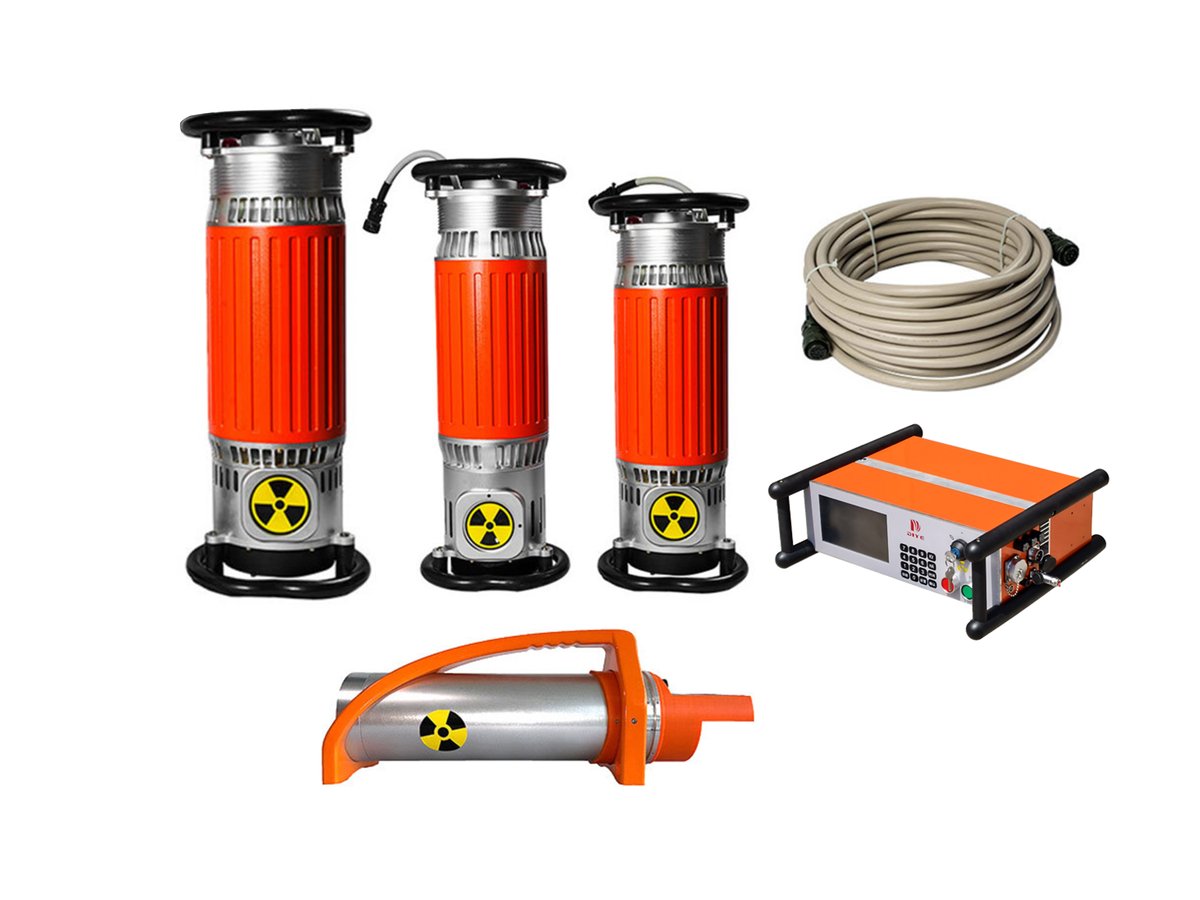
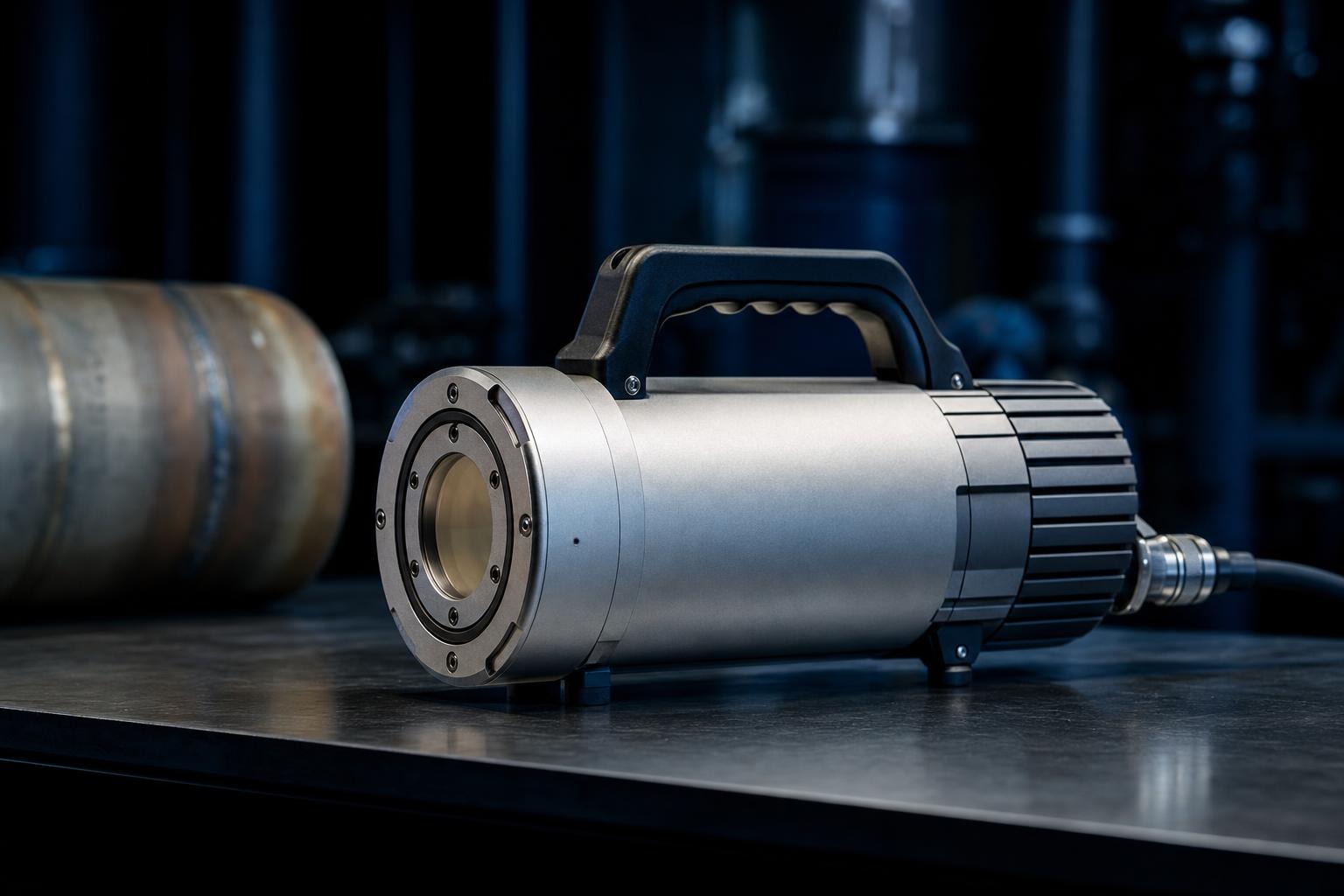
generic portable industrial X-ray tube for radiographic inspection without logo
X-ray sources

Portable X-ray tubes and generators 160–320 kV

Generators for radiographic inspection in the field, in the workshop, on the production floor and for NDT service companies. The choice between 160, 200, 300 or 320 kV depends on material, thickness, geometry, accessibility and required sensitivity.

  • Directional or panoramic generators for welds, piping and metallic components.
  • Portable, trolley-mounted or integration-ready configurations.
  • Configuration chosen for the place of work and the expected number of exposures.
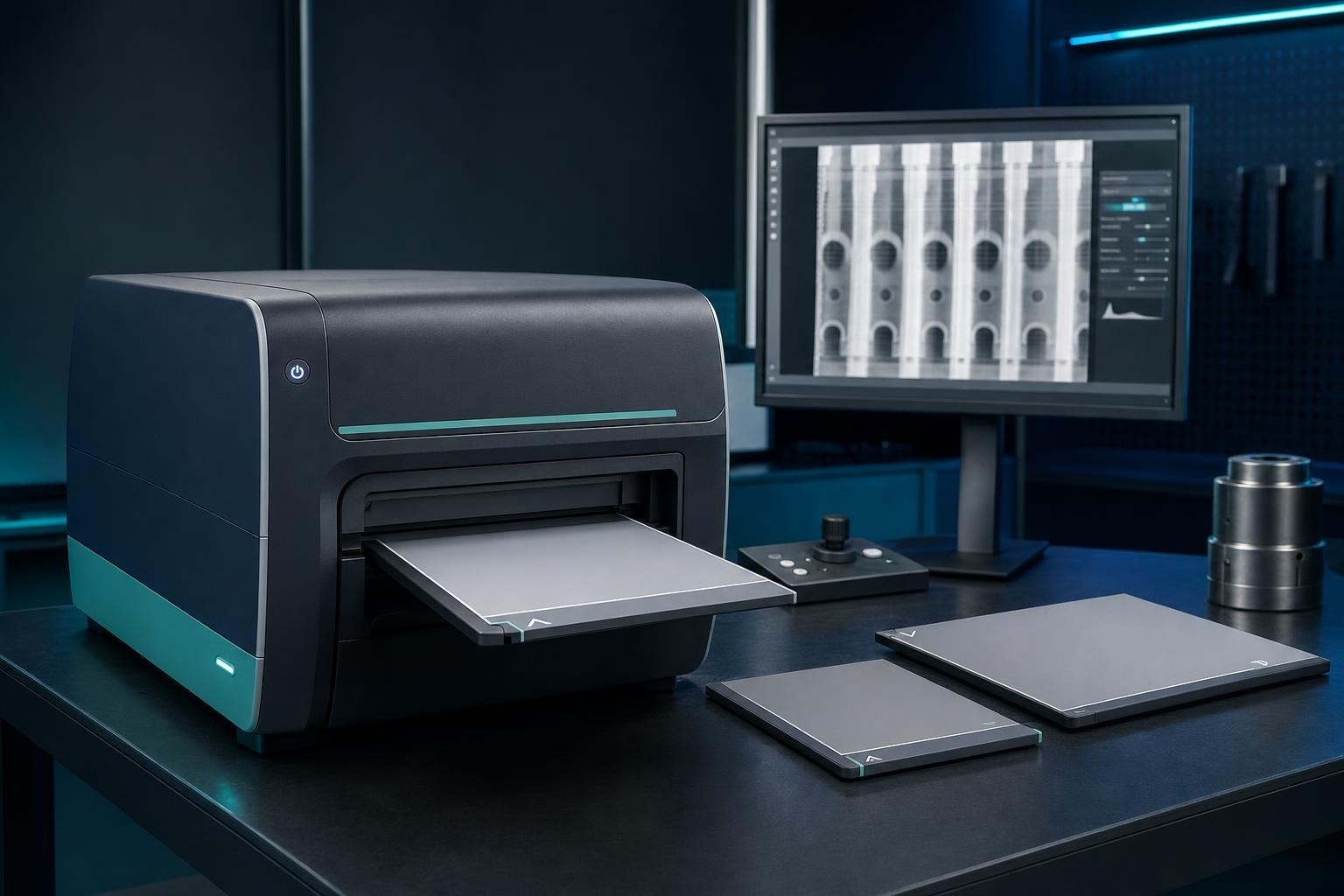
computed radiography CR scanner with imaging plates without logo
Computed Radiography

CR systems, imaging plates and scanners

CR takes film work digital using reusable imaging plates, cassettes, CR scanners and image-viewing software.

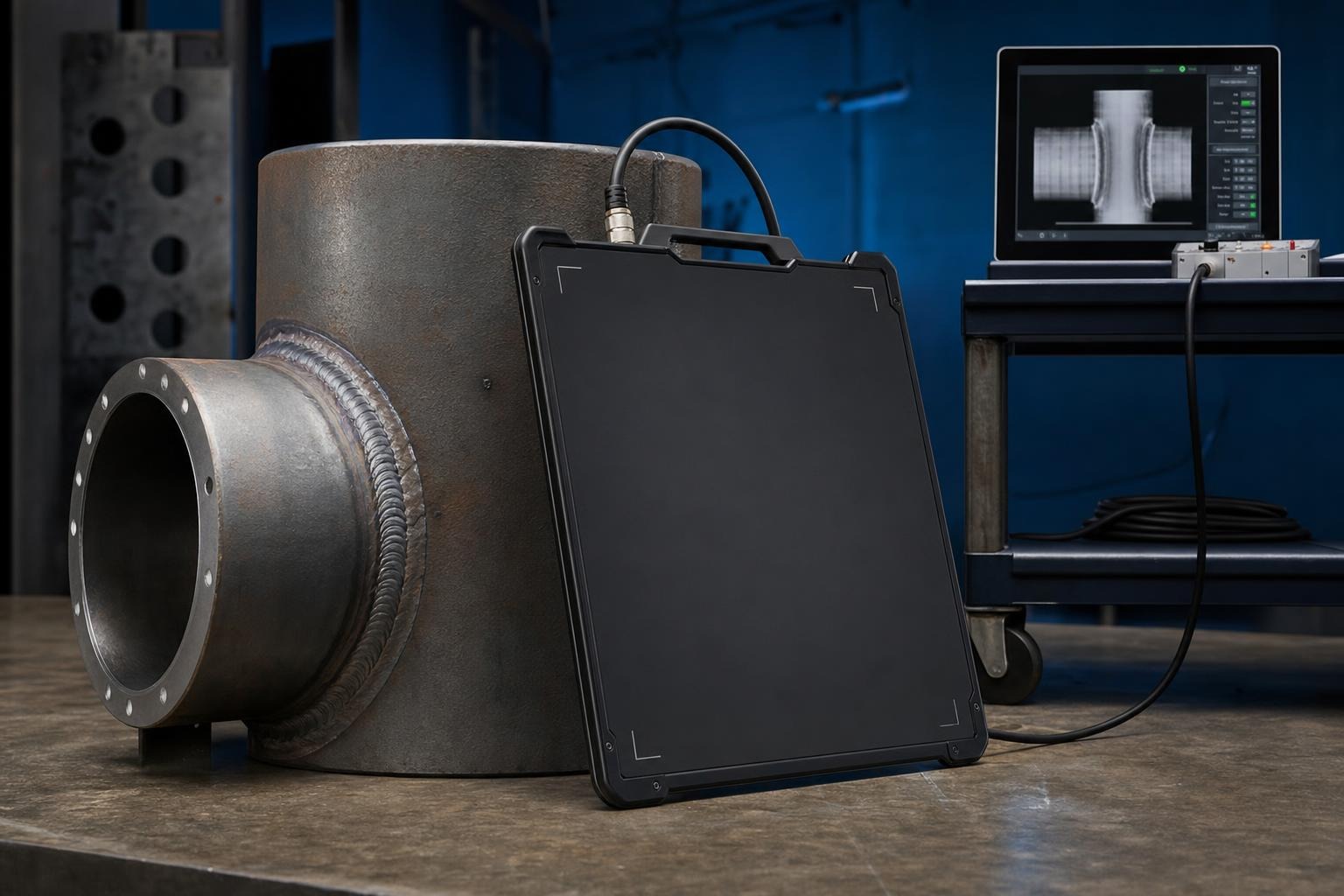
DR flat panel detector for industrial radiography without logo
Digital Radiography

DR and flat panel detectors for industrial radiography

Direct-acquisition digital detectors, with the image available right away, digital archiving and reports ready for quality control.

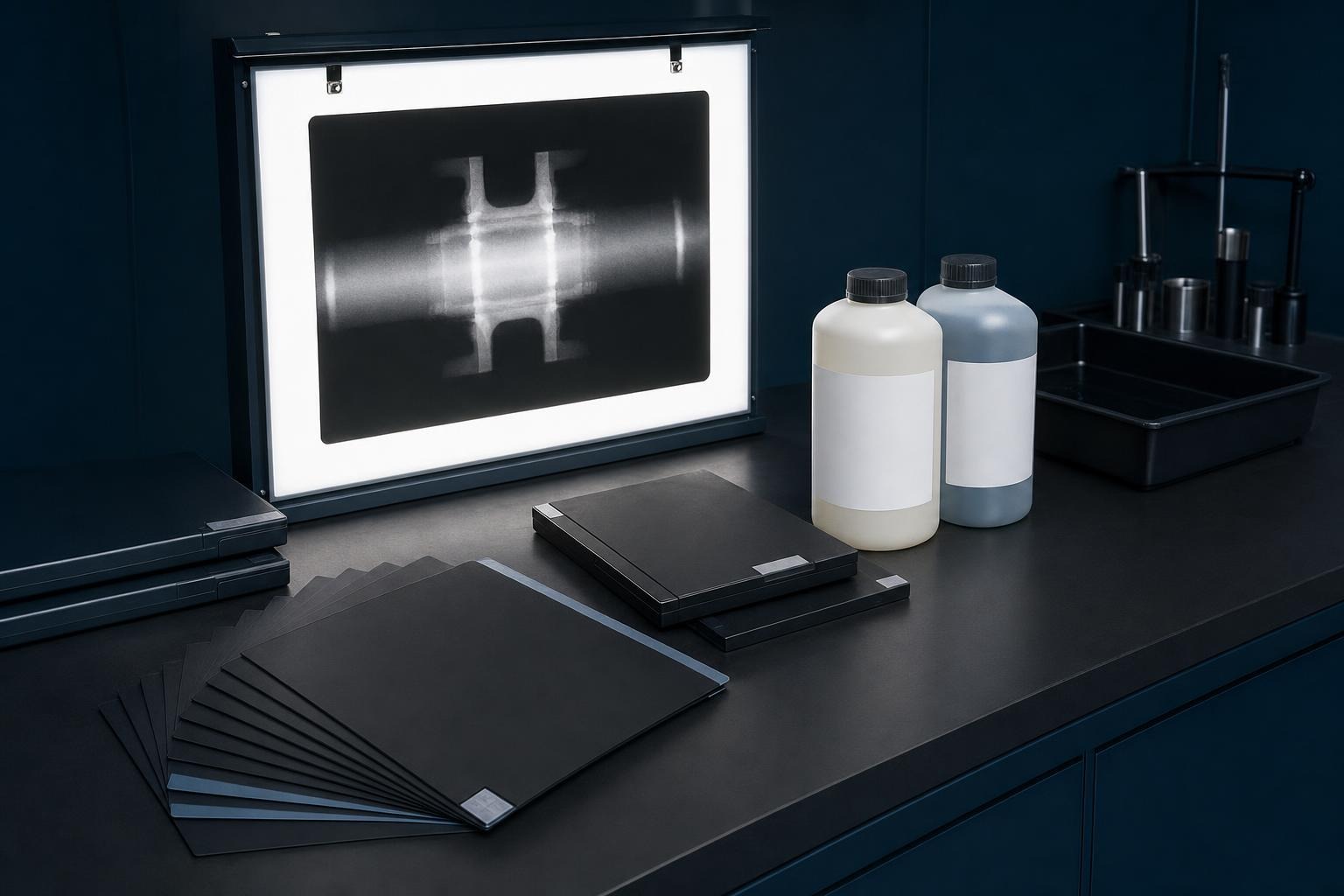
industrial radiographic films and viewing light box without logo
Film radiography

Industrial radiographic films

Films in a range of formats and pack sizes for conventional radiographic testing and for procedures that still require film.

radiographic processors chemicals and films without logo
Darkroom process

Processors and chemicals for film workflow

Automatic or manual processors, developer and fixer chemicals, process-control products and consumables for film radiography.

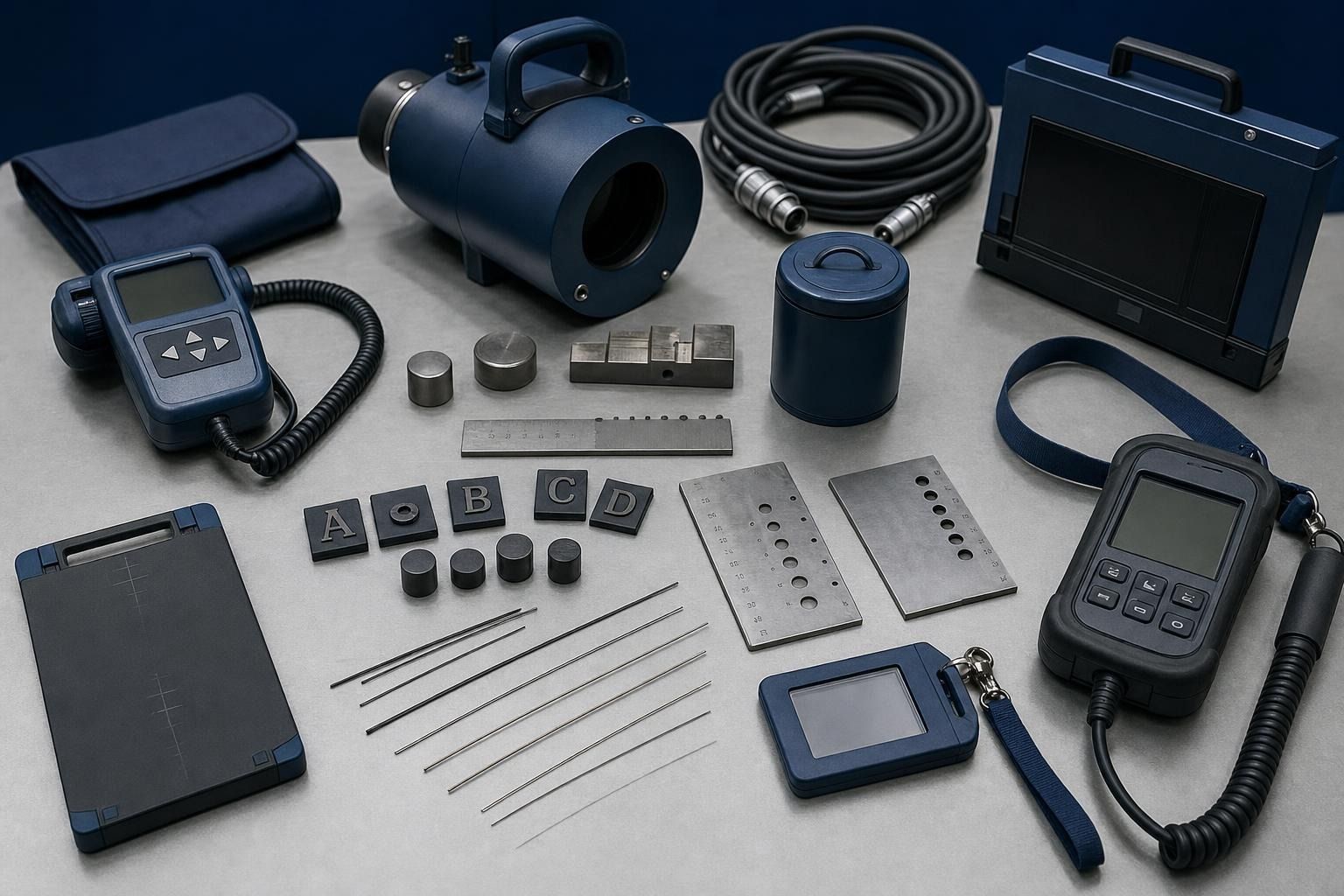
radiographic accessories IQI penetrameters markers and reading tools without logo
RT accessories

Radiographic accessories and reading tools

Cassettes, screens, markers, lead letters and numbers, IQI/penetrameters, densitometers, film viewers, envelopes, folders and image-identification materials.

dosimeters and radiation safety instruments without logo
Radiation safety

Dosimeters, radiation monitors and safety supports

Dosimetry, area monitoring, warning signs, shielding and procedural aids for radiation safety.

reference samples and radiographic inspection blocks without logo
Validation

Reference samples, blocks and application kits

Reference samples, blocks and kits for comparative tests, demonstrations, training and a preliminary check of the radiographic setup.

Film, CR or DR

Three ways of working, one choice driven by procedure and volume.

Film radiography

Still the required route when the procedure or the client calls for it, or when a physical archive of the films is needed.

Computed Radiography

The gradual move to digital, with imaging plates and a scanner, and image handling that is more flexible than film.

Digital Radiography

Direct digital images, high throughput and traceable inspections inside the software.

Our products

The radiography systems we distribute

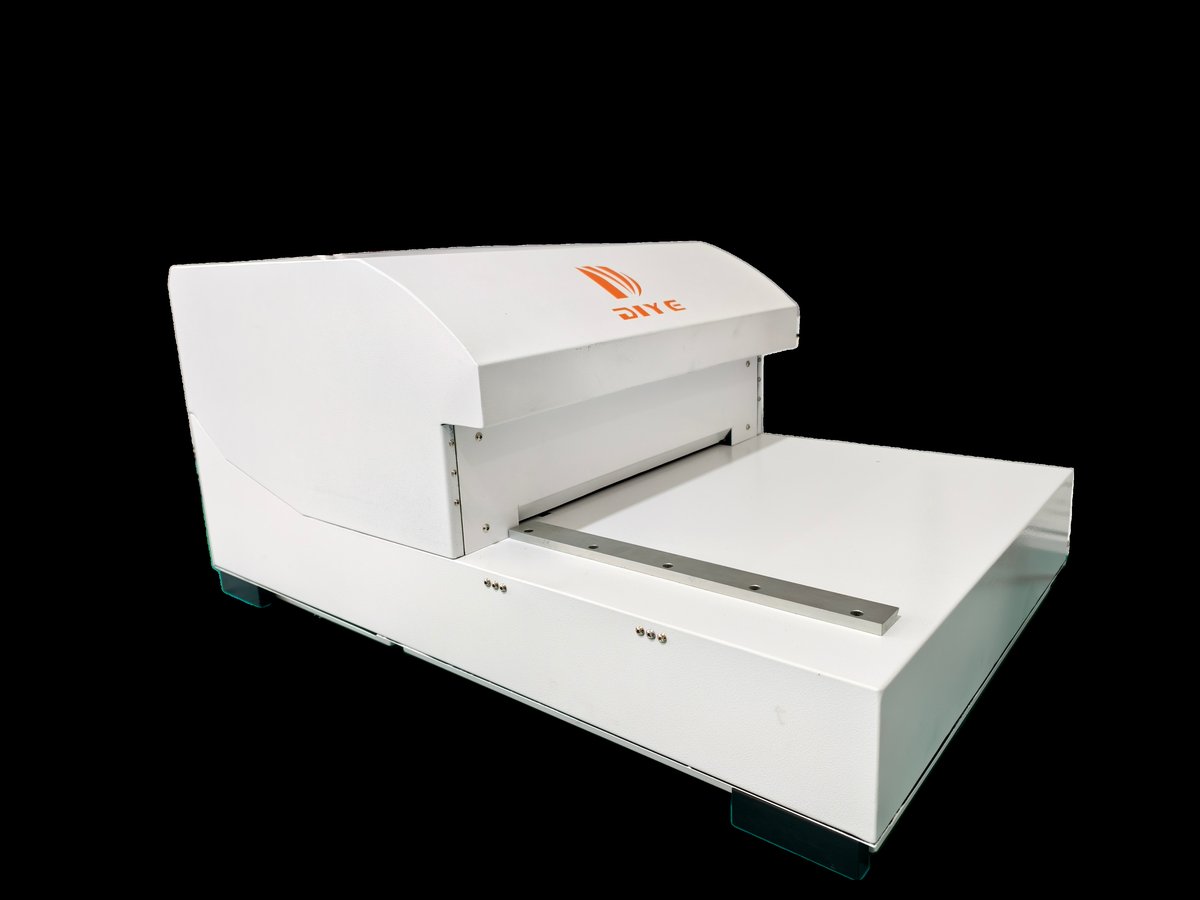
DIYE portable X-ray sources and film digitizer represented by DIPITECH.

Industrial radioscopy

Industrial radioscopy: real-time X-ray inspection.

Radioscopy uses the same X-rays as industrial radiography, but the image appears on the monitor while the part is still in the machine. A DR detector acquires continuously and a manipulator rotates and tilts the component until porosity or shrinkage shows up from the best angle. Cycle time drops to seconds or a few tens of seconds per part, enough to inspect 100% of production. The same systems are often sold as real-time X-ray or inline X-ray inspection systems.

Cabinet, manipulator and detector

A lead-shielded cabinet houses the X-ray tube, a multi-axis manipulator and the DR detector. For strong magnification of small details, a microfocus tube is the choice. Usable volume, load capacity and energy are sized on the largest and thickest part, not on the average one.

Aluminum castings and die casting

Housings, gearbox casings, wheels and structural parts for automotive, light-alloy castings for aerospace. High volumes combined with volumetric defects (gas porosity, shrinkage, inclusions) are what pay for a cabinet.

Automatic defect recognition (ADR)

ADR software compares each image with a model of a good part and flags indications above threshold. It has to be trained on parts with known defects and monitored over time, because false rejects cost money but false accepts are the real risk.

When a cabinet is the wrong tool

Welds on large structures, pipelines on site and one-off parts stay with portable generators and film, CR or DR. When you need the depth of a defect or its volume, a projection is not enough and computed tomography takes over.

Standards for radioscopy and digital radiography

A sound specification names two separate things: the technique standard, meaning how an adequate image is obtained, and the acceptance reference, meaning what gets rejected.

  • EN 13068-3:2001 sets the general principles of radioscopic testing of metallic materials, with no acceptance criteria.
  • ASTM E1734-23 covers radioscopy of castings. It controls image quality rather than acceptability, and excludes fully automatic evaluation.
  • ASTM E2698-26 and E2737-23 are applied together, the first for examination with digital detector arrays (DDA), the second for checking detector performance and stability.
  • ISO 17636-2:2022 covers welds inspected with digital detectors, while acceptance levels are in the ISO 10675 series.
  • EN 12681-2:2017 is the reference for castings inspected with digital detectors.
  • ASTM E505-22 provides reference radiographs for porosity in aluminum and magnesium die castings.

Cycle times, cost per part and the volumes above which a cabinet outperforms conventional radiography are covered in when industrial radioscopy pays off. If you need a system configured around your parts, including 3D CT, the details are on the page on custom CT and radioscopy systems.

If you need to turn an ISO 5817 quality level into a technique class and an acceptance level, use the ISO 5817 weld radiography tool. For image quality indicators there is the IQI selection tool: enter thickness, material and code (ASME V, ASTM or ISO 17636) and get the wire or hole that must be visible on the image.

System selection

Which X-ray system for which application.

Five configurations cover almost every industrial radiography job. The type of part, the place of work and the number of inspections per shift decide the choice, more than the catalog does.

Comparison of industrial radiography systems: film, CR, portable DR, radioscopy cabinet and CT
SystemType of partEnvironmentThroughputDigital archivingWhen to choose it
Portable X-ray generator + filmWelds, piping, steel structures, one-off partsField and siteLow: exposure, processing, reading on a film viewerOnly by digitizing the filmsWhen the procedure or the client still requires film
Computed radiography (CR)Welds, piping including curved surfaces, irregular geometriesField and labMedium: imaging plates read in the scanner within minutesNative, DICONDE formatTo move away from film with flexible plates, without changing exposure technique
Portable DR (flat panel)Welds, components, maintenance inspectionsField, workshop, labHigh: image in seconds, immediately repeatableNativeWith recurring volumes, short plant downtime and data to trace
Radioscopy cabinet with DRAluminum castings, die castings, series componentsProduction line and labVery high: 100% inspection, also with ADRNative, images for every partWith medium to high series, volumetric defects and an agreed reject criterion
Computed tomography (CT)Complex castings, additive manufacturing parts, assembliesLabLow per part: minutes to hours per scanNative, 3D volumeWhen defect position and volume, or a dimensional check, are needed

For further reading there are the buying guide for an X-ray system, the comparison between CR and DR, the criteria to choose a DR detector, how to size the X-ray tube and generator, the page on industrial computed tomography and the path to digitize a film archive.

Buy or service

Buy an X-ray system or outsource inspection to an NDT service company?

It depends on how many inspections you run and who has to sign them. Teams that radiograph welds or castings every week, in production or as a service company, usually find it more cost-effective to own the system: every exposure done in-house avoids shipping or waiting and stays under your own quality control. Moving to CR or DR also removes chemical processing and film archives.

For a few inspections a year, or when the customer requires a report signed by an independent inspector, an NDT service company is the better route. For a new installation, remember that an X-ray system needs a radiation protection expert’s assessment before use. Let us know how many inspections you expect and on which parts, and we’ll help you work out which route suits you.

Which X-ray system does your part need?

Tell us the part, material, thicknesses and volumes: we will recommend the right X-ray system and send you a quote within 24 hours.

  • Quote within 24 hours
  • Radiography, radioscopy, CR and DR
  • Technical support in Italy
Applications

Typical applications of industrial radiography.

WeldsPipingFoundries and castingsAerospaceAutomotiveOil & GasEnergyMetal fabricationNDT service companiesProduction quality control
DIPITECH approach

Application first, product second.

Before we talk about models, we ask what you need to inspect, how many parts a day and under which procedure. The system is chosen afterwards, based on those answers.

What to send us for an evaluation

  • Material and thickness of the part, with a photo or drawing.
  • Defect to find and standard or acceptance level.
  • What you use today: film, CR or DR.
  • How many parts a day and where: shielded room, field or production line.
  • Size and weight of the largest parts.
  • Available space and radiation safety constraints.
Technical criteria

How to choose the tube, generator and radiography system.

A radiography system is sized around the part to be inspected, because material, thickness and the defect you are looking for decide energy, exposure geometry and detector type. These are the parameters we review with you before proposing a configuration.

Energy (kV/MeV) and thickness

This is the first parameter to set. The thicker and denser the material, the more energy it takes to penetrate it with useful contrast. Portable generators rated 160 to 320 kV cover most steel up to medium thicknesses, while high thicknesses or dense materials call for higher energies, up to the MeV range of linear accelerators.

Focal spot and sharpness

The focal spot decides geometric sharpness, that is how blurred the edges of a defect look in the image. A small focal spot is needed for magnification work or fine defects.

Film, CR or DR

Film is still a benchmark for resolution, but it needs chemical processing and takes time. CR uses reusable phosphor plates read in a scanner, while DR delivers the image as soon as the exposure ends. What matters is volume, required throughput and how quickly you want to phase out film.

Image quality and IQI

The required sensitivity is demonstrated with the image quality indicators (IQI) called for by the standard. That in turn drives the choice of detector, exposure parameters and source-to-object distance.

Duty cycle and cooling

With many exposures a day, what counts is how long the tube can run before it has to stop and cool down. Duty cycle and cooling should be checked against real volumes, in the field as in the cabinet, or the throughput promised on paper never materializes.

Radiation safety and compliance

Radiography works with ionizing radiation, so shielding, controlled areas, dosimetry and procedures are part of the project from day one. DIPITECH also helps you choose radiation-protection accessories and supports training.

In the technical resources you will find the guides Industrial X-ray Tube and Generator: How to Choose, CR or DR? Digital Industrial Radiography Compared, DR Detector for Weld Radiography: How to Choose and Radiography or Ultrasonic Testing? Weld Inspection Compared. To set up testing in-house or with an outside service, read the guide to weld radiography. On weld radiography in practice there are also the typical cases of weld and casting radiography, who sets the ISO 10675 acceptance levels and how focal spot and X-ray tube parameters decide sharpness.

How radiography compares with ultrasonics, CT and surface methods is covered in the non-destructive testing overview.

FAQ

Frequently asked questions on industrial radiography

What energy (kV) do I need for my thickness?

It depends on material and thickness. Portable generators rated 160 to 320 kV cover much of the steel range up to medium thicknesses, while high thicknesses or dense materials need higher energy. Send us the material and maximum thickness and we will tell you which source to use.

Which is better: film, CR or DR?

The procedure comes first. If the client still requires film, that is where you start. CR is the simplest step into digital, with reusable plates read in a scanner, while DR pays off when inspections are many and repetitive, because the image arrives in seconds.

Is industrial radiography covered by standards?

Yes. Exposure technique, image quality verified with IQIs, acceptance levels and operator qualification are set by standards and procedures, for example ISO 17636 for welds and the ISO 10675 series for acceptability. Tell us the standard or specification you have to meet and we will propose a matching system and accessories.

Can DIPITECH also help with accessories and radiation protection?

Yes, we help you choose films, chemicals, processors, reference blocks, radiographic accessories, dosimeters and radiation-protection materials, in addition to tubes, generators and CR/DR systems.

What is the difference between radioscopy and radiography?

Radiography produces a static image for each exposure (film, CR or DR) and evaluation comes afterwards. Radioscopy acquires continuously with a digital detector while the part moves, and evaluation happens in real time. It is used mainly for 100% inspection of castings and series components, while radiography remains the standard for welds, one-off parts and field inspection.

Which X-ray system suits aluminum castings?

For die castings and light-alloy castings produced in series, the usual choice is a radioscopy cabinet with a DR detector and manipulator, with or without automatic defect recognition. Porosity is graded against the ASTM E505 reference radiographs. When pore depth and volume are needed, computed tomography is added, while for a few dozen parts a year a DR setup in the lab can be enough.

Can a radiographic film archive be digitized?

Yes, with an industrial film digitizer that reads the full optical-density range of the films and stores images in DICONDE format. If digitized images are also used for evaluation, the system has to be qualified to the ISO 14096 series. All the steps are in our guide on how to digitize radiographic film.

What is needed to operate an industrial X-ray system in Italy?

In Italy the use of ionizing radiation sources is governed by Legislative Decree 101/2020, which transposes Directive 2013/59/Euratom. Depending on generator energy and type of use, it requires prior notification (art. 46) or a license (nulla osta, art. 50), with a radiation protection expert appointed by the employer. The company sets up the procedure with its own expert, and we supply the technical data of the equipment needed to prepare it.

How do I request an evaluation?

Tell us the material, thickness, defect type, volumes and working environment. With this data we propose the most suitable radiography configuration and send you a quote within 24 hours. You can use the form below or WhatsApp.
Application support

Technical support, installation and training.

Once the system is chosen, we help you define the project and follow you through the next steps.

Configuration

Technical requirements, accessories, software and documentation needed for your radiography application.

Installation and start-up

For cabinets and fixed systems, we coordinate installation, commissioning and initial trials with the manufacturer.

Training

Initial training, hands-on support during initial operation and a link with the manufacturer for service and spare parts.

Contact

Let’s find the right radiography system for your parts.

If you need to buy, evaluate or upgrade an industrial radiography system, from the X-ray generator to CR, DR or radioscopy, DIPITECH Industrial Solution helps you clarify the requirement, compare the options and reach the right configuration.

Application request

Tell us about the radiographic inspection.

Include part, material and thickness, the defect you are looking for, volumes and place of work.

WhatsApp